
Why a tooth comes out
- Decay too deep to fix
- An infection that will not clear
- A tooth badly broken in an accident
- Gum disease that has taken the bone away
- Not enough room in the jaw
- Making space before braces
- Wisdom teeth causing damage
Extractions & wisdom teeth, and the bone underneath.
Wisdom teeth, broken teeth, and the ones you have been told cannot be saved. Removed under sedation by a board-certified surgeon, with the socket handled carefully enough that an implant can still go in afterwards if you want one.
What brought you here
Two things, explained simply
Everything most people want to know, in plain English. Pick the part you came for.
Tooth extraction
Removing a tooth is sometimes the right treatment, but the decision should begin with one question: can the tooth be kept predictably and healthfully? Here is how we evaluate that, and what happens if it does have to come out.
Type one
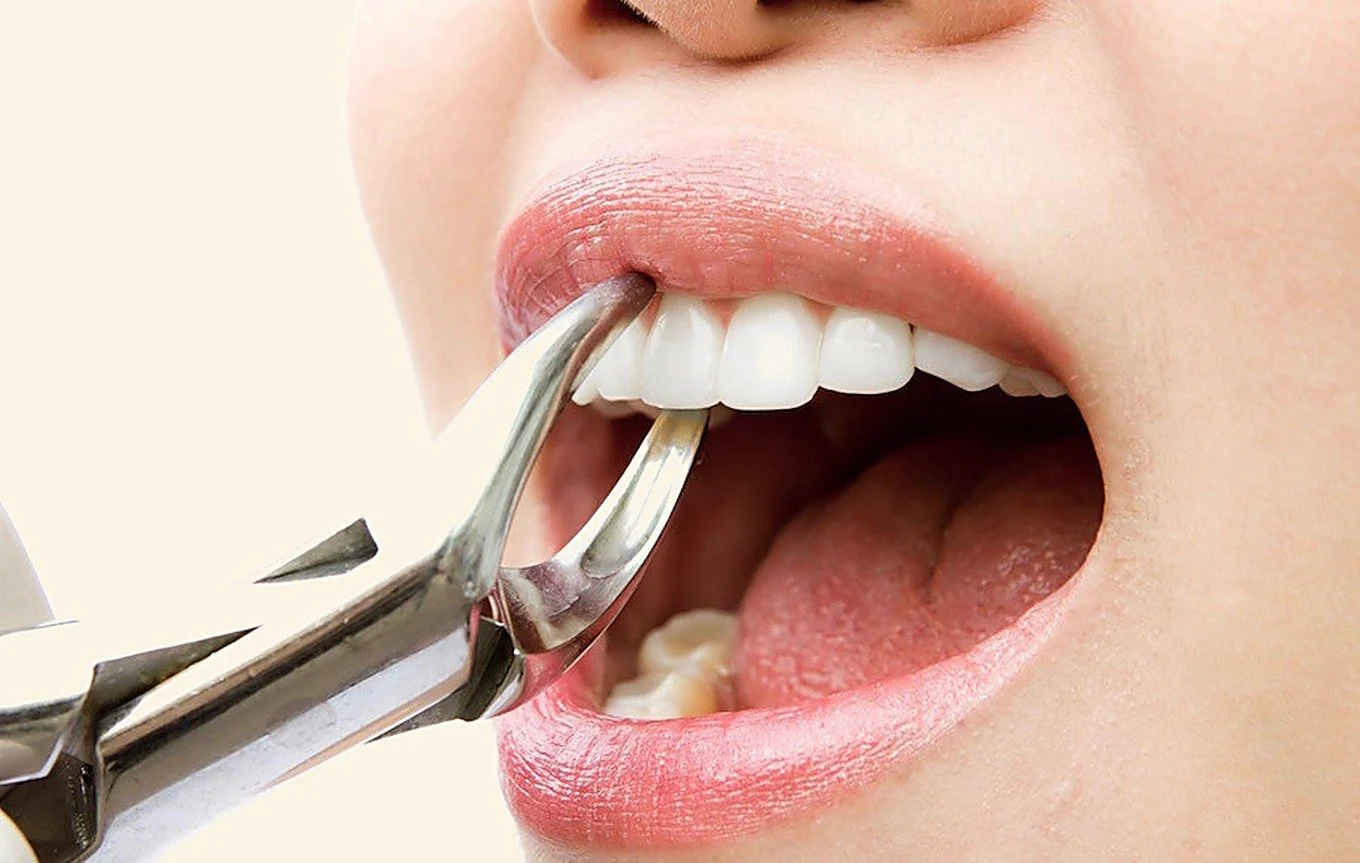
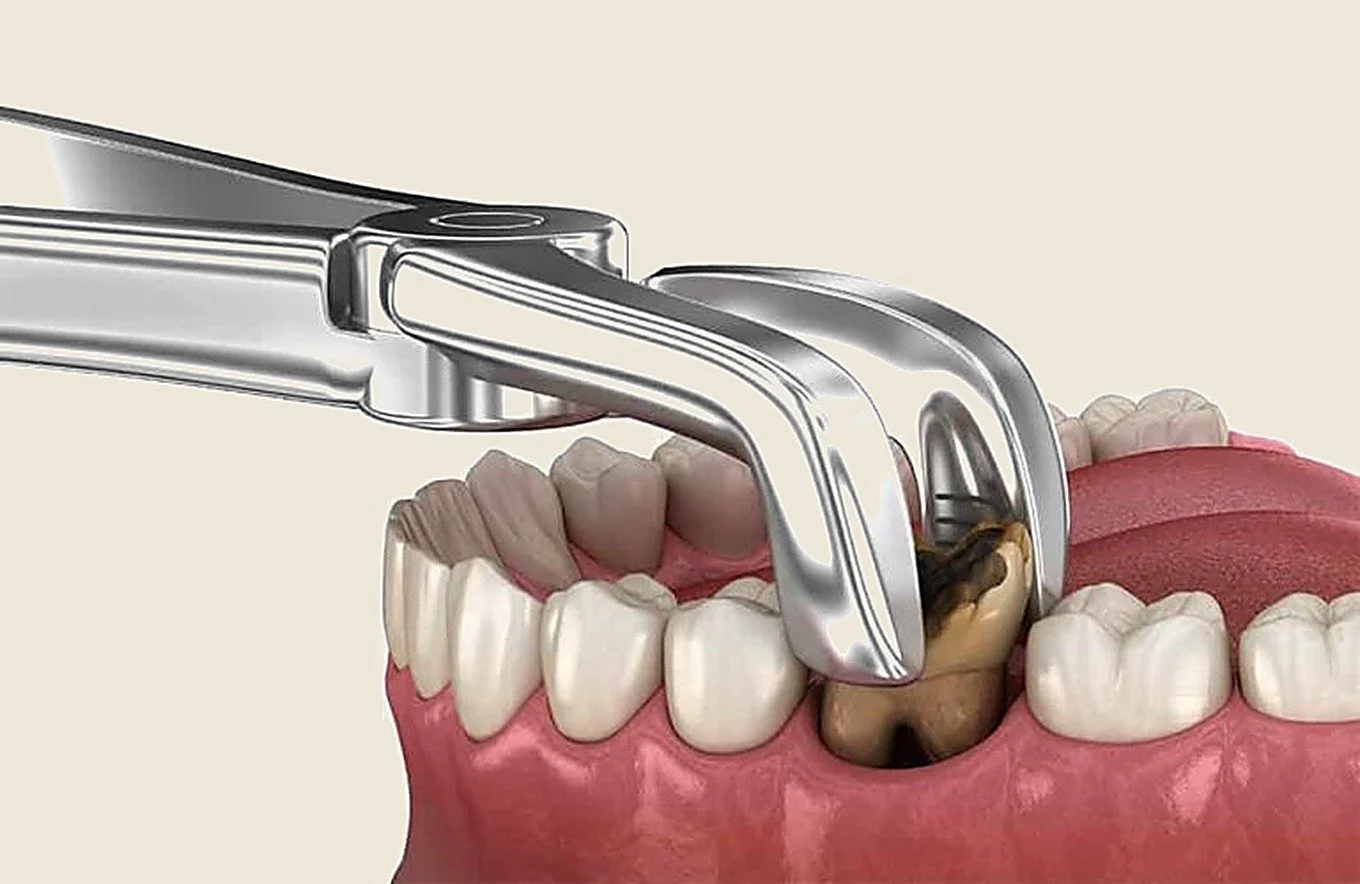
A tooth that is fully erupted and accessible may sometimes be removed with a simple extraction. We numb the area, loosen the tooth, and lift it out. No cutting.
Most people feel pressure rather than pain.
Type two
A broken, impacted, partially erupted, or anatomically difficult tooth may need a surgical approach, which can include a small incision, removal of surrounding bone, or sectioning the tooth so each root comes out its own way.
The word “surgical” does not by itself predict how difficult recovery will be. Complexity depends on the tooth, roots, bone, infection, age and anatomy, so we clean the socket and stitch the gum according to what your case actually needs.
Comfort
Sedation is available for selected patients. The appropriate level depends on the procedure, anxiety, medical history, medications, airway considerations, and safety, so we discuss the options with you rather than assuming one is right.
If you are nervous, say so at the first visit. It is the most common reason people put this off for years.
Please tell us
Blood thinners, osteoporosis medicines, steroids and diabetes medication can all change how we plan things. So can past radiotherapy to the head or neck, even years ago.
Most of the time none of these stop you having the tooth out. We just need to know first. Never stop a medicine on your own before dental treatment.
Time & cost
These are typical ranges, not guarantees, since complexity varies by tooth. Price depends on how many teeth, simple or surgical, and whether you want sedation. Dental or medical insurance may cover part of it. We check both and quote you before you book.
Wisdom teeth
They arrive in your late teens or twenties, into a jaw that already stopped growing. If there is room, they are normal teeth. Wisdom teeth do not need to be removed simply because they are present. If there is not enough room, they can sometimes cause trouble for the tooth in front of them.
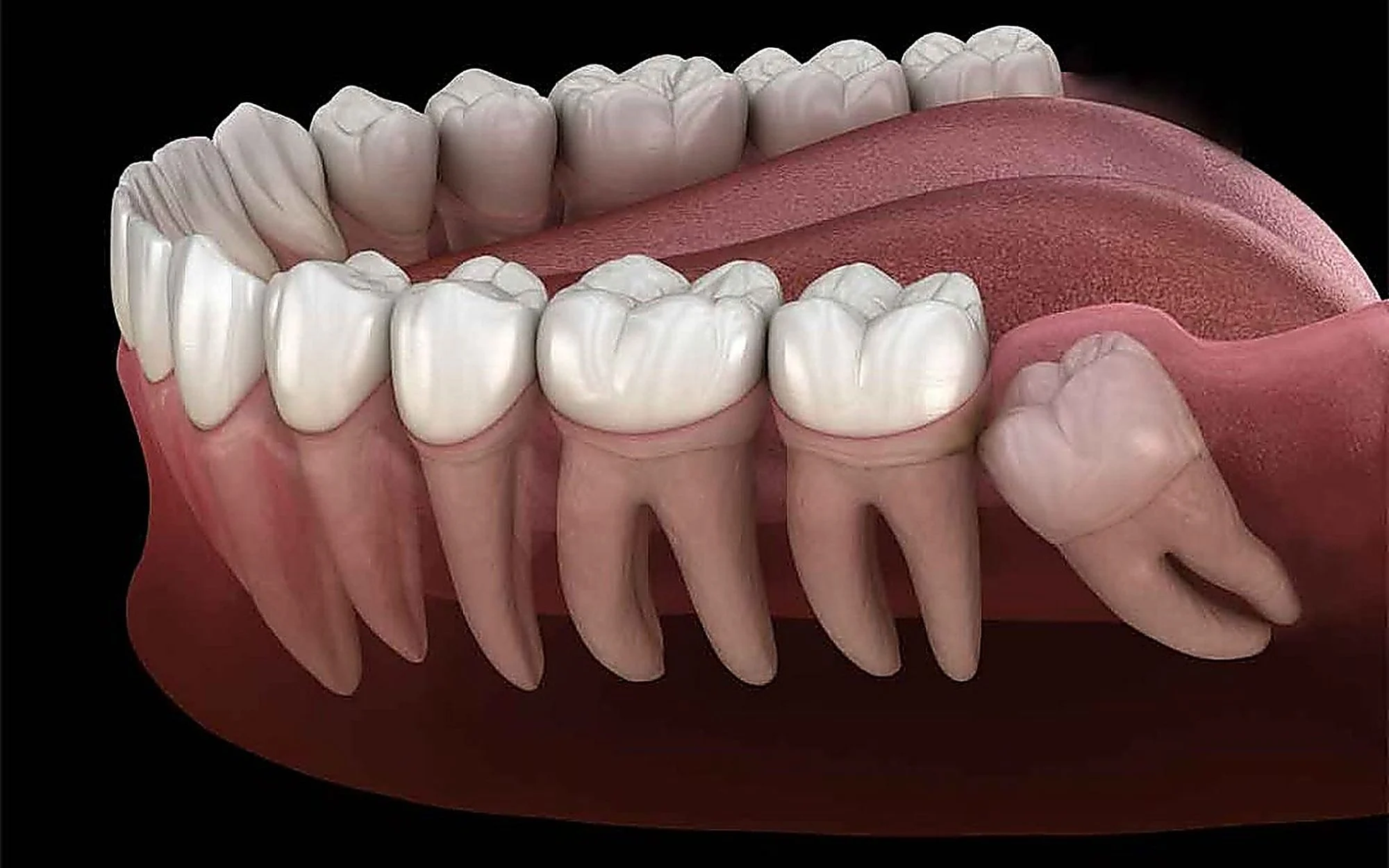
A stuck tooth is called impacted. It can be tilted forward into its neighbour, standing upright but trapped under the gum, or lying almost on its side.
Tilted forward is the most common. Lying on its side does the most damage.
A common cause
When a wisdom tooth is only half through, a flap of gum sits over it. Food and bacteria get underneath, and it can swell up.
Antibiotics can help settle an active infection, but they do not remove the flap itself, so symptoms can return. Recurrent infection is one of several reasons removal may be recommended, alongside the overall diagnosis.
Honestly
A healthy, functional, cleansable wisdom tooth that bites against the tooth above may be appropriate to keep. We will not take out healthy ones just because they are there.
That said, an asymptomatic wisdom tooth may still need monitoring, since the absence of pain does not always mean the absence of disease.
Good to know
Lots of people do not. Some have three, some have two, some have none at all. One X-ray answers it.
Plenty of people come in expecting four removals and leave being told they have two.
Lower ones
A nerve runs through the lower jaw, sometimes near the roots of a lower wisdom tooth. It is what gives feeling to your lip and chin.
Imaging helps us evaluate the relationship. In selected higher-risk cases, additional 3D imaging or a modified surgical plan may be considered, and we discuss the specific risks and alternatives with you before treatment.
Your choice
Most people do all four in one sedated appointment. One recovery, one lot of time off, one bill.
One side at a time means you can still chew on the other. Neither is better medically: it comes down to how much disruption you would rather take in one go.
Afterwards
Upper wisdom teeth often come out more easily and cause less discomfort. The lower ones sit in harder bone, so they tend to cause more of the swelling and stiffness.
For many patients, day two or three is the peak of it, followed by steady improvement, though recovery varies from person to person.
Healing & what comes next
Most of your recovery comes down to a handful of simple things in the first few days. And unless it was a wisdom tooth, there is one more decision to make about the gap.
Days one to three
Important
A blood clot forms in the socket. It covers the bone underneath while new tissue grows. Everything on the “do not” list is there to protect it.
No straws, no smoking, no spitting, no hard rinsing for the first few days. Suction and pressure are what pull it out.
Watch for this
Dry socket occurs when the protective clot is lost or breaks down before the socket is adequately covered by healing tissue. It is not the most common outcome, and it can cause significant pain, often with a pattern where things feel better for a day or two before turning worse. Not every postoperative ache is dry socket, and not every extraction carries the same risk.
Call us if you are concerned. It usually needs local care, and relief typically follows soon after treatment. Do not sit at home hoping.
Eating
Do not skip meals. Healing needs fuel.
Pain
Take the first dose before the numbness wears off. Taking pain relief on a schedule tends to work better than waiting until pain has already started.
Then stick to the schedule for the first couple of days rather than waiting to see how you feel. Take it with food.
All normal
Swelling often peaks around day two or three, getting worse before it gets better. A stiff jaw after a lower wisdom tooth commonly takes about a week to loosen. Bruising can show up on your cheek and drift downwards as it fades.
Small sharp bits of bone sometimes work their way out weeks later. Come in and we will smooth it off.
Call us straight away
Trouble breathing or swallowing is an emergency. Go to an emergency room, do not wait for us to open.
The gap
Bone under an empty socket can start shrinking within weeks. Over time, the teeth either side may lean into the space, and the tooth above may drop down.
It is worth deciding within a reasonable window, not to sell you something, but because the site you would build on can slowly get worse the longer replacement is delayed.
Your options
For non-wisdom teeth, replacement depends on which tooth was removed, the condition of neighboring teeth, the bite, bone and gum anatomy, esthetic needs, and your goals. Options may include an implant, a bridge, a removable prosthesis, orthodontic space management, or in selected situations no replacement.
Wisdom teeth usually do not need replacement. There is no tooth behind them to drift, so the gap generally heals on its own.
Trusted & recognized
The credentials behind every tooth we take out, and every one we talk you out of.
 Voted DeSoto's Best, 8 years in a row 2018 to 2025
 Selected Face of Dental Implants, 9 years in a row 2018 to 2026
 Voted Memphis best periodontist 2 times
 Midsouth's only Board Certified Dual Specialist
 Voted Top Dentist, 7 years in a row 2020 to 2026
 30 Years of Clinical Experience
Your surgeons
Both board-certified. Both operating here every week.

A former University of Tennessee professor and program director, and the only board-certified periodontal and implant surgeon who is also a prosthodontist in the southern United States. Degrees from the University of Alabama and the University of Tennessee, with postdoctoral training at Indiana University. That combination is why the conversation about removing a tooth and the conversation about replacing it happen in one room, with one person. Fellow of the International College of Dentists.
Learn more →
Board-certified in periodontics, with his dental degree from USC's Ostrow School of Dentistry and postgraduate surgical training at the University of Pittsburgh. Dr. Patel works with a deliberately light touch on soft tissue, the quality that counts for most on a frenectomy, and on any extraction where the bone has to survive intact for an implant later.
Learn more →