
Diagnosis before procedure
Treatment is never assumed from a symptom alone. We determine what’s actually causing the concern before recommending how to treat it.
A healthy smile starts with more than the teeth.
Your smile is a combination of teeth, gums, lips, facial proportions, function and health. A concern that looks cosmetic can have several possible causes. We look at what's actually behind it before recommending treatment.
Where would you like to begin
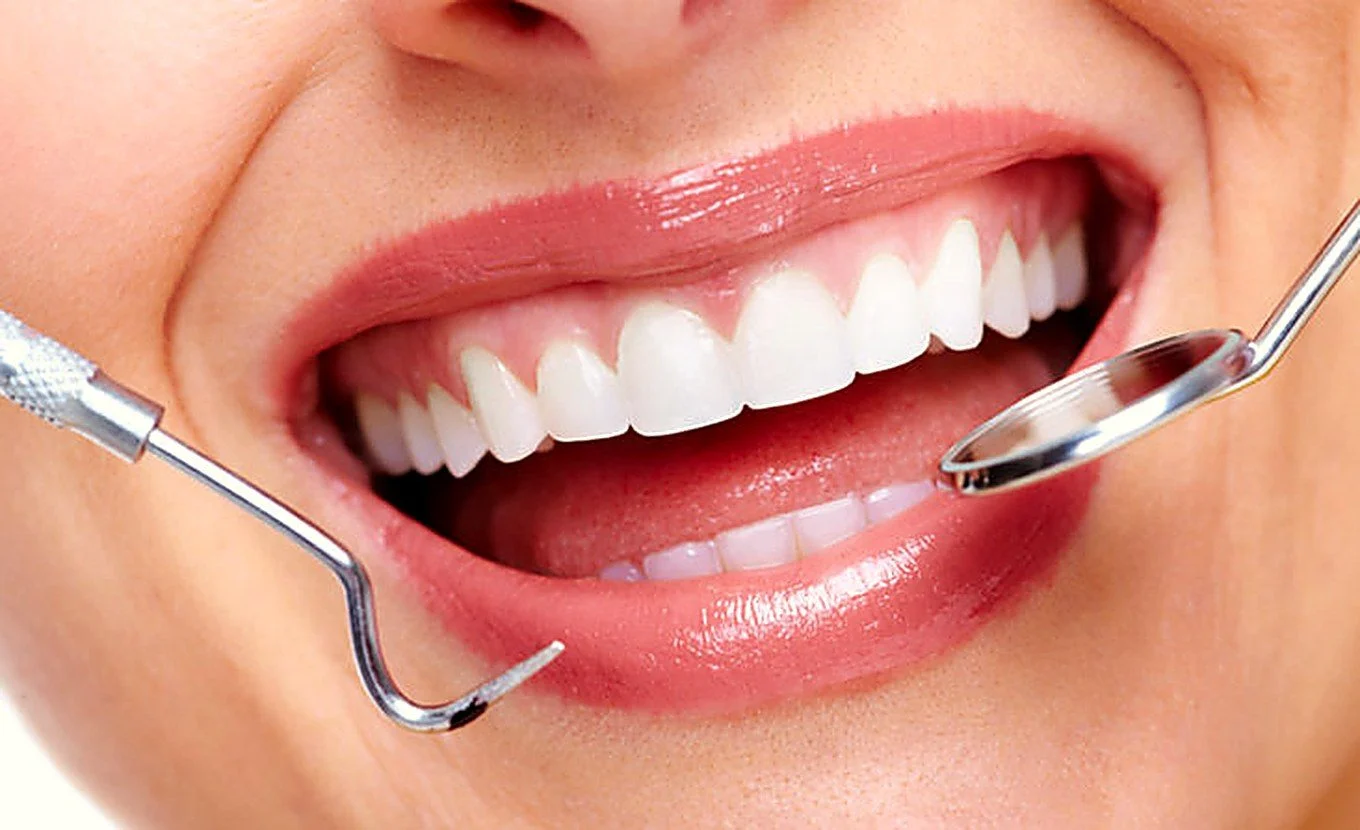
Gums and teeth, planned together
The gum line has real influence on tooth proportion, symmetry and the overall look of a smile, not just the teeth themselves.
Patients often focus first on the teeth, but the gum line has real influence on tooth proportion, symmetry and the overall appearance of a smile. Gums that cover more of a tooth can make it look shorter. Recession can expose the root and make a tooth look longer. Gingival pigmentation may be entirely healthy and still be an esthetic concern for some patients.
The same principle applies to restorative treatment. A fractured or decayed tooth that extends below the gum line may need periodontal treatment before it can be restored predictably. So we look at the smile as a whole. Depending on the diagnosis, treatment may involve veneers, gum contouring, crown lengthening, soft-tissue grafting, depigmentation, orthodontic or restorative care, another approach, or sometimes no procedure at all. If we identify periodontal disease, decay, bite problems, grinding or inflammation that could compromise the result, we address that as part of the plan.
Why here
Nine things that shape how we approach cosmetic dentistry at this practice.
Treatment is never assumed from a symptom alone. We determine what’s actually causing the concern before recommending how to treat it.
Board-certified in periodontics and prosthodontics, so gum position, supporting tissue, teeth and function are considered together, not split across two offices.
There is no single ideal smile. Planning accounts for your facial features, tooth proportions, gum line, bite, age and what you actually want to change.
Preserving healthy tooth structure is a priority. We explain when preparation is genuinely needed and when a more conservative option will do.
Laser technology is useful for selected soft-tissue procedures. It’s one option among several, not a substitute for diagnosis.
Periodontal disease, decay, bite problems, grinding or inflammation are treated as part of the plan, not worked around for the sake of appearance.
When a medication may be contributing to a gum concern, we look at it as part of your evaluation and coordinate with your physician when appropriate.
Sedation and other comfort options are raised at your consultation, based on your history and the procedure planned, not sprung on you in the chair.
Every smile on this page belongs to a patient of this practice. No stock faces, no rendered previews standing in for results.
The treatments
Every one of them is on this page in full, with nothing hidden and nothing summarised away. Most makeovers use two or three of them together.
Porcelain veneers
A veneer is a thin, custom-made restoration bonded primarily to the front surface of a tooth. Veneers can change selected aspects of the color, shape or proportion of a tooth, but they aren’t the right answer for every cosmetic concern. When a patient asks about them, we first determine what’s actually creating the concern.
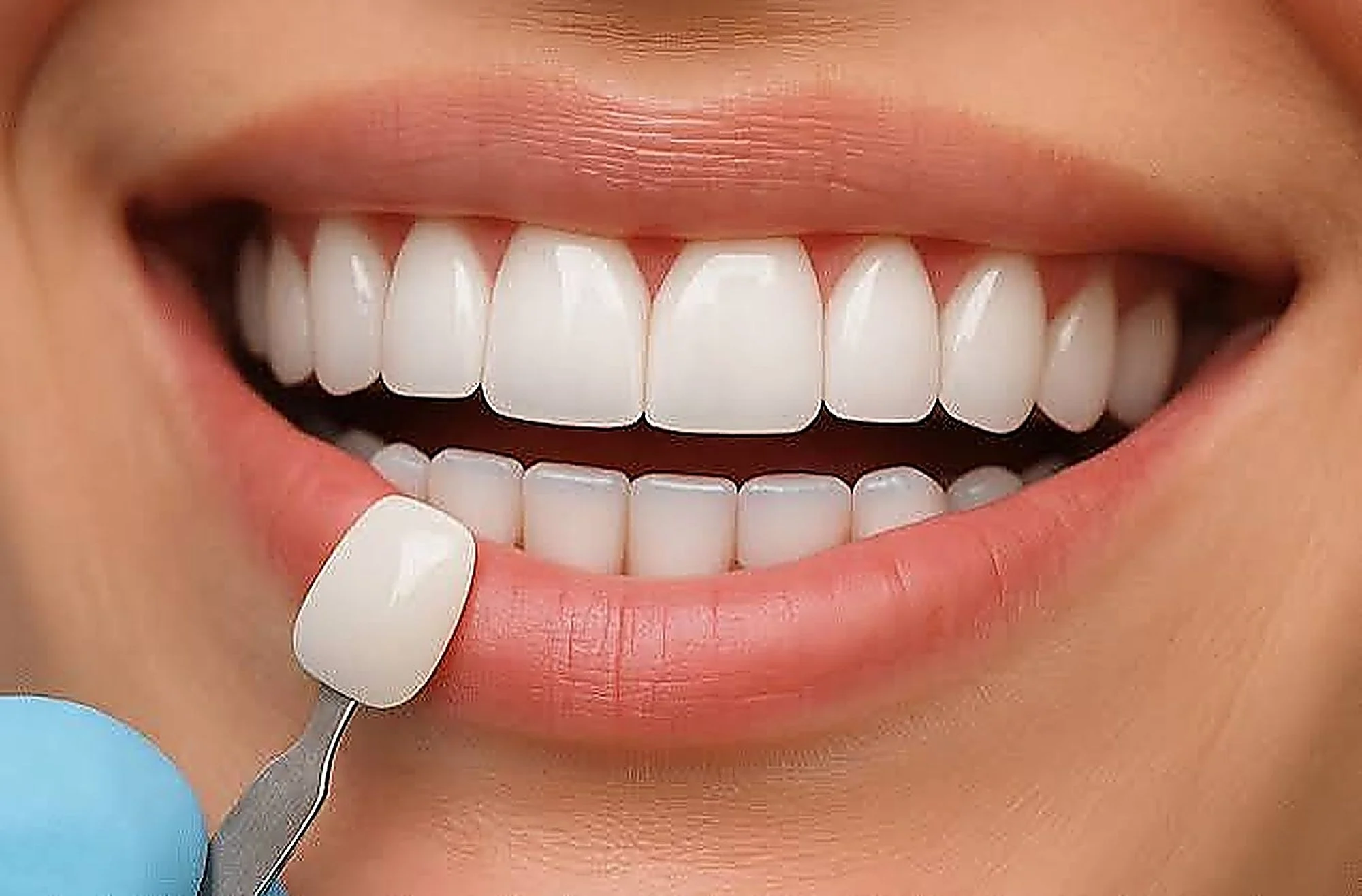
Porcelain is commonly selected because it can provide natural-looking translucency, color stability and durability. Composite resin is another option in appropriate cases and may take less time or be easier to repair. The advantages and limitations of each are weighed for the individual patient.
The choice isn’t simply “healthy tooth equals veneer, damaged tooth equals crown.” We consider how much sound structure remains, existing restorations, cracks or decay, available enamel for bonding, bite forces, tooth position, periodontal health and long-term prognosis before recommending either.
Minimal- and no-prep
In selected cases, very thin veneers need minimal or no tooth preparation. That doesn’t make a no-prep approach automatically better. Trying to avoid preparation when the tooth needs it can create an overcontoured result. When structure is removed for veneers, the treatment is generally considered irreversible.
The decision
Your preferences matter, but the recommendation follows an assessment of your medical history, medications, the condition of your gums and bone, how much enamel is left, and how your bite loads the front teeth. We explain the reasoning before you decide.
Aftercare
Porcelain itself doesn’t decay, but the natural tooth behind a veneer can, and the surrounding gum can become inflamed. Brushing, interdental cleaning and regular maintenance are what protect the restoration and the tissue supporting it.
What to expect
The exact number and timing of visits varies with the number of teeth, the complexity of treatment, the material selected, and whether other periodontal, orthodontic or restorative treatment is involved.
Gummy smile & gum contouring
A smile that shows more gum than a patient prefers is often called a gummy smile. Clinically, this is excessive gingival display. The amount of gum visible can be influenced by gum position and shape, tooth eruption, lip movement, tooth position, skeletal anatomy, medications and other factors, often more than one at once, which is why treatment begins with determining the cause.
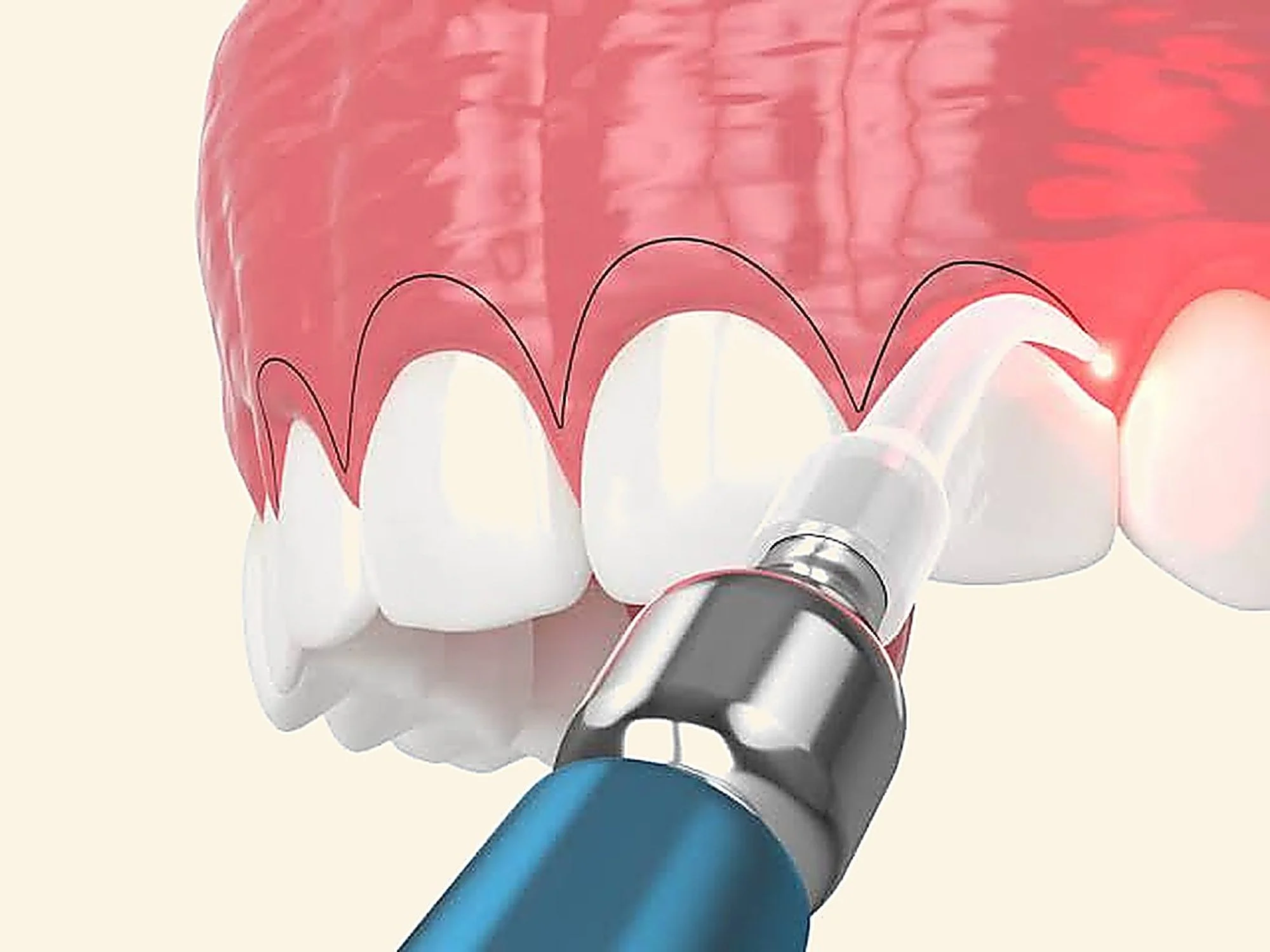
Possible contributing factors include the position or contour of the gum margin, altered or incomplete passive eruption, tooth size or position, upper-lip length or movement, vertical skeletal relationships, orthodontic history, and gingival enlargement associated with inflammation or medications. More than one factor is often present.
There’s no single treatment for every gummy smile. Depending on the diagnosis, options may include soft-tissue contouring, esthetic crown lengthening, orthodontic treatment, lip repositioning, Botox in selected cases, orthognathic surgery, restorative treatment, or a combination. Sometimes no treatment is necessary.
Related, not identical
These terms are related but don’t all mean exactly the same thing. A gingivectomy removes gingival tissue; gingivoplasty reshapes it. Esthetic crown lengthening is planned to expose more of the natural tooth and, depending on the anatomy, may involve soft tissue alone or also the underlying bone. The examination determines which is appropriate.
A laser is one of the tools available for periodontal and soft-tissue treatment, and in an appropriate case it may be useful for selected procedures. It isn’t a substitute for diagnosis, and isn’t automatically the best technique for every patient. When the underlying bone must also be addressed, the procedure is planned around your anatomy.
Certain medications can contribute to gingival enlargement in susceptible patients. When this is suspected, we look at periodontal condition, plaque and inflammation, and medical and medication history before recommending treatment, and coordinate with your prescribing physician when appropriate. Patients should never stop or change a prescribed medication on their own.
One option among several
In selected patients, Botox may temporarily reduce upper-lip movement when lip dynamics contribute to the concern. Because the effect is temporary and gummy smiles can have several causes, it isn’t presented as an alternative to proper diagnosis. The plan depends on the individual patient.
Functional crown lengthening
When decay, a fracture or an existing restoration extends below the gum line, there may not be enough accessible healthy tooth structure to restore the tooth predictably. Crown lengthening can sometimes expose enough sound structure to save it, but not always, and the decision is based on the tooth’s prognosis after treatment, not simply on whether the procedure is technically possible.
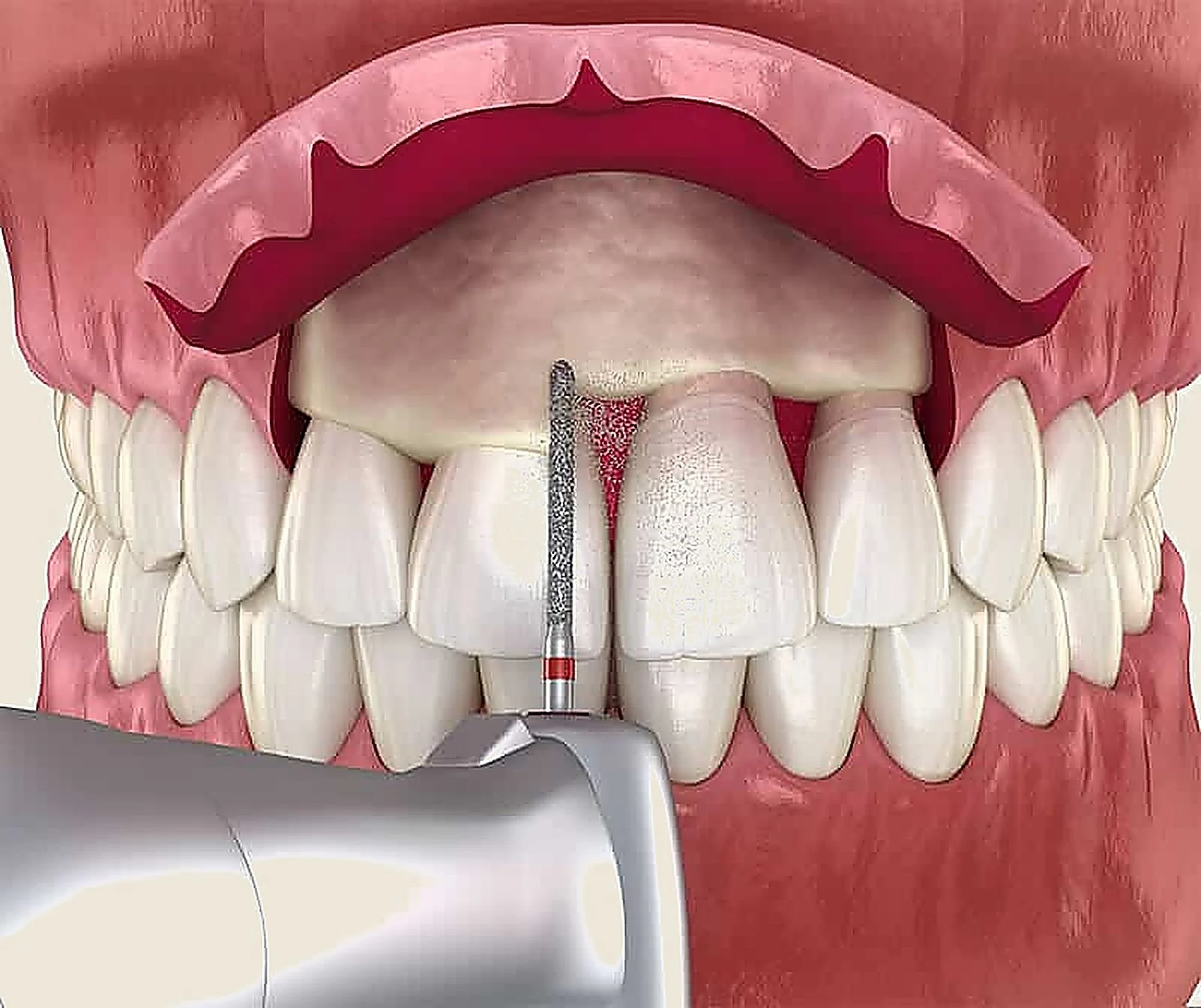
Crown lengthening exposes more of the natural tooth above the gum line. Depending on the case, this may involve repositioning the gum and, when necessary, carefully reshaping the supporting bone. The crown here means the visible portion of the natural tooth, not a porcelain cap, though a restoration may follow.
Some cases have both functional and esthetic considerations, and the plan accounts for both.
The question isn’t simply “can we expose enough tooth for a crown?” We consider the tooth’s prognosis after treatment: remaining structure, periodontal and bone support, root anatomy, tooth position, esthetics, cleansability and long-term maintainability. If crown lengthening is unlikely to give a predictable result, another treatment may be more appropriate.
We review your medical and periodontal history, take X-rays to assess the teeth and bone, and ask in detail about every medication you take. Where a crown will eventually be involved, an impression may be taken at this stage for a temporary. Sedation is available and discussed at the consultation if it would help.
The procedure is individualized. After local anesthesia, the gum tissue is managed to provide access and repositioned according to the treatment goal. Supporting bone is reshaped only when the anatomy and restorative or esthetic plan require it. Where the case suits it, the same work can be done with a laser.
Your question, answered
The number depends on your anatomy, bone density, how much gum is exposed and your medical history. The goal is an even, stable result across the smile, not a change to one tooth that then looks out of place.
What to expect
Receding gums & soft tissue grafting
Gum recession means the gum margin has moved away from its previous position, exposing more of the tooth or root, a surface never designed to be uncovered. Before recommending treatment, we determine why it happened, whether it’s progressing, whether the area is healthy and maintainable, and what problem it’s actually causing.
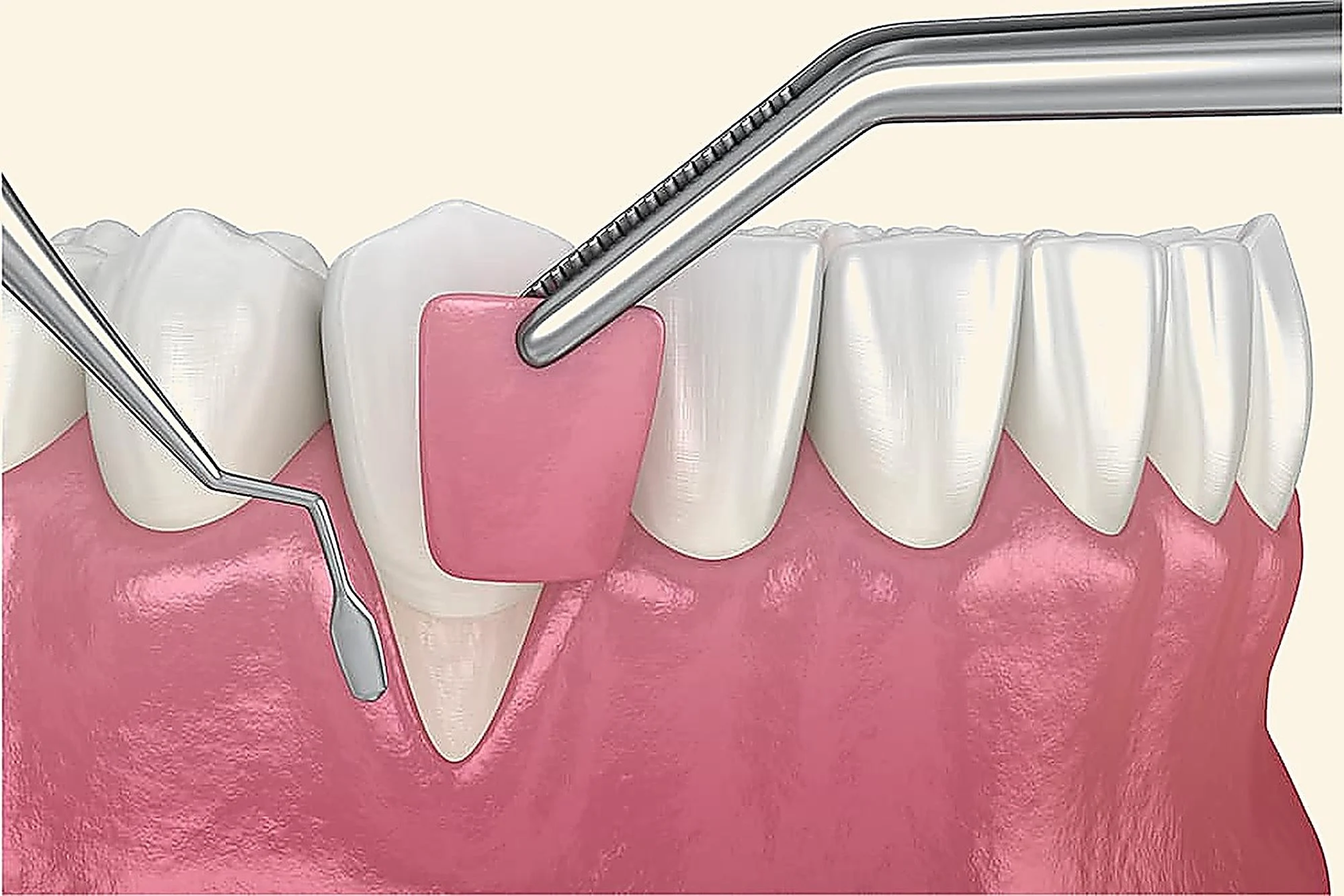
The cause is often multifactorial: periodontal disease and loss of supporting bone, thin or vulnerable tissue, tooth position and bone anatomy, aggressive brushing, plaque-related inflammation, orthodontic history, frenum or muscle pull, restorative or bite factors, and other patient-specific risks.
No. Some areas are healthy, stable and maintainable and may only need monitoring or correction of the contributing cause: better plaque control, a brushing-technique change, treating inflammation. Surgery is considered when the diagnosis, progression risk, tissue quality, sensitivity or cleansability make it beneficial. We treat the cause, not just the visible recession.
Most common
Connective tissue is obtained from beneath a small flap at the roof of the mouth, and the flap is stitched back into place so the donor site heals hidden. The harvested tissue covers the exposed root. Often used because it’s predictable for a range of recession cases.
Thin tissue
Tissue is taken directly from the surface of the palate rather than from beneath a flap. Often used when the goal includes increasing the amount or thickness of tissue, not just covering the root.
Neighboring tissue
Tissue is borrowed from the gum next to the receded tooth and repositioned over the root while staying partly attached, keeping its own blood supply. An option where the neighboring gum has tissue to spare.
Minimally invasive
One of several approaches that may be considered for selected recession cases. A small access point is used to mobilize and reposition gum tissue, sometimes with collagen or other supportive materials. Its less invasive nature can be appealing, but it isn’t a replacement for conventional grafting in every patient.
Donor tissue
Processed, commercially available donor tissue instead of your own, so there’s no second surgical site in your mouth. Can be particularly useful when several teeth need treatment at once.
The decision
There’s no single best graft for every patient. We consider the recession anatomy, tissue quality, available donor tissue, number and location of teeth, bone support, treatment objective, expected root coverage and your preferences before recommending an approach, and explain the reasoning.
Who does it
Soft-tissue treatment begins with diagnosis and case selection. Specialty training and experience are useful not only for performing surgery, but for evaluating the cause of recession, understanding available tissue and bone support, and planning for long-term stability.
What to generally expect
Gum pigmentation & depigmentation
Healthy gums naturally occur in many shades. Brown or darker pigmentation is often a normal result of melanin and doesn’t mean the gums are unhealthy. If you’re concerned about the appearance, the first step is confirming it’s normal and longstanding rather than a sign of something else.
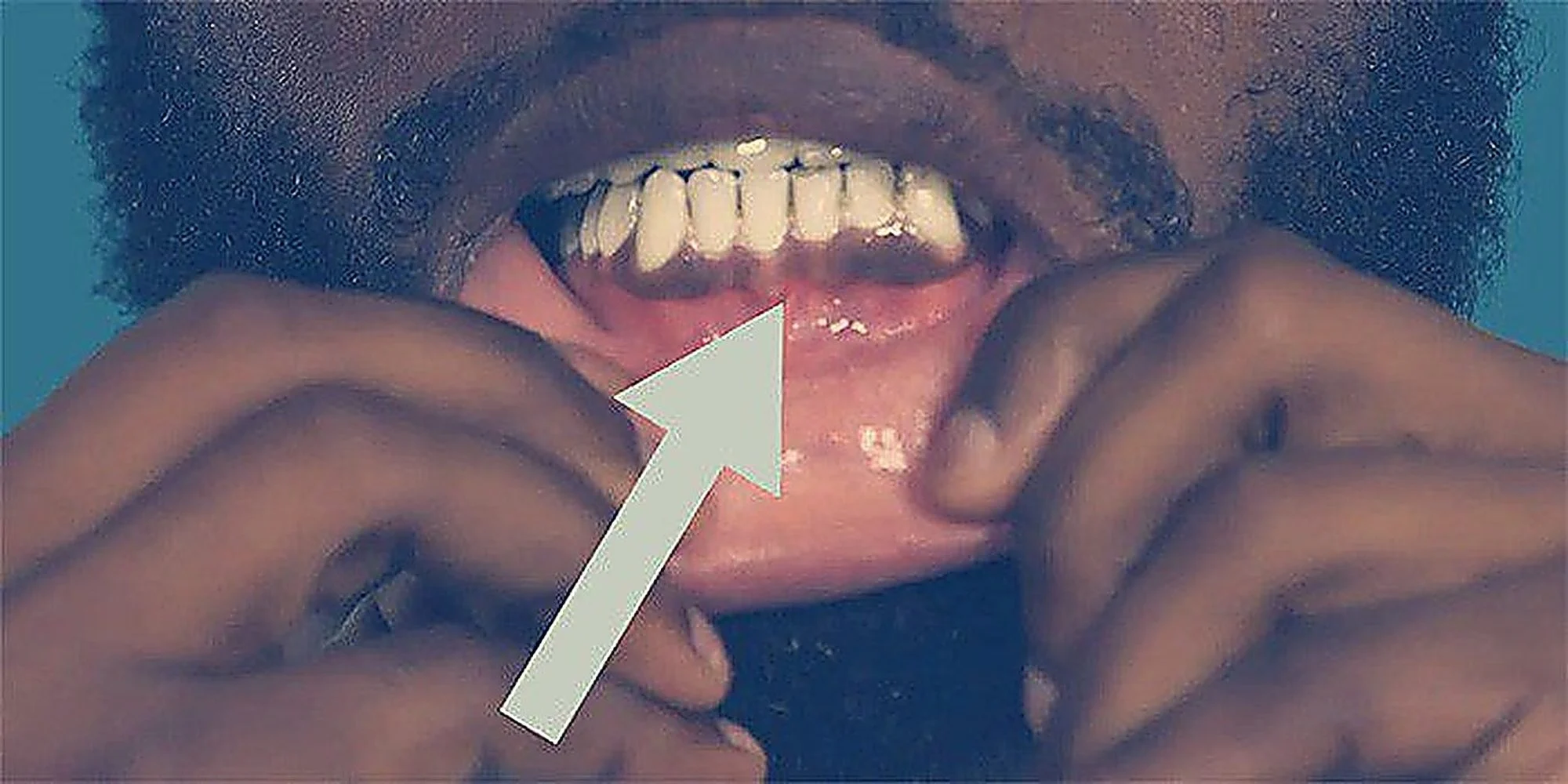
Gingival color varies naturally among individuals. Melanin and genetics are common reasons for physiologic pigmentation. Smoking, medications, inflammation, systemic conditions and other factors can also influence oral pigmentation. We review your history before discussing cosmetic treatment.
Tobacco use can be associated with increased melanin pigmentation in some people. Smoking also affects periodontal health and healing, so we consider it as part of your overall periodontal evaluation, not as an isolated cosmetic issue.
Worth checking
Longstanding, symmetric pigmentation may be normal. A new, changing, localized, asymmetric or otherwise unusual area (blackish, reddish or bluish) deserves professional evaluation before it’s treated cosmetically, since it can occasionally point to something beyond simple pigmentation.
Laser is one technology that may be used for gingival depigmentation, deliberately rather than bleaching agents that can damage tissue. Other techniques may also be appropriate; we select the approach based on the tissue, extent of pigmentation and your goals.
We first confirm the nature of the pigmentation and the health of the surrounding tissue, then discuss the area you’d like treated, the technique, and what to expect. Local anesthesia is used during the procedure itself, and recovery is individualized.
Yes. No technique eliminates the body’s natural ability to produce melanin, so repigmentation can occur over time. The degree and timing vary from patient to patient. That’s worth understanding before elective depigmentation, not after.
One appointment
Bring us the thing that bothers you. We evaluate the gums, the bone beneath them, the bite and the teeth themselves, then discuss which of these treatments actually fits your case, and which you can skip.
Southaven, MS · serving Memphis & the Mid-South · sedation available
Trusted & recognized
The credentials behind every gum line we reshape.

Voted DeSoto's Best, 8 years in a row 2018 to 2025
Selected Face of Dental Implants, 9 years in a row 2018 to 2026

Voted Memphis best periodontist 2 times

Midsouth's only Board Certified Dual Specialist
Voted Top Dentist, 7 years in a row 2020 to 2026

30 Years of Clinical ExperienceStep by step
The same responsibility applies whatever a patient first asks about: understand the concern, make the right diagnosis, then recommend what actually fits it.
A patient may arrive asking about veneers, a gum graft, laser treatment, crown lengthening, or another specific procedure. Our first responsibility is to understand what’s bothering you and make the correct diagnosis, not to start with the procedure you named.
We evaluate the teeth, gums, supporting bone, bite, smile, medical and dental history, medications, risk factors and treatment goals. Where a condition could compromise a cosmetic result, it’s identified here.
We discuss what we believe offers the best balance of health, predictability, practicality, esthetics and long-term prognosis, including options you didn’t ask about, and the possibility that no procedure is needed.
If periodontal disease, decay, bite problems, grinding or inflammation could compromise the result, that’s treated as part of the plan. The foundation comes before the cosmetic work built on top of it.
Whatever the plan calls for (gum contouring, grafting, crown lengthening, depigmentation, veneers, or a combination), timing and sequencing are planned around your anatomy and healing, not a fixed script.
Tissue continues to heal and mature after the initial recovery period, and any restorative work is coordinated with that timeline. After that, ordinary hygiene appointments and periodic evaluation keep the result healthy.
At a glance
General ranges only. Your own timeline depends on the diagnosis and the specifics of your case.
Your clinicians
The people who will design, reshape and finish your smile.

A board-certified periodontist and prosthodontist with 30 years of clinical experience. The practice identifies him as the only practicing board-certified periodontist and prosthodontist in the southern United States, and that combination lets periodontal health, gum position, tooth structure, restorations, function and esthetics be evaluated together rather than split between two offices. Advanced training at the University of Tennessee and Indiana University hospitals.
Learn more →

Trained at USC's Ostrow School of Dentistry and the University of Pittsburgh, Dr. Patel treats the soft-tissue side of care, evaluating and grafting receded gums, contouring the gum margin, and treating pigmented tissue as part of a diagnosis-first approach to periodontal health.
Learn more →The difference
Cosmetic dentistry built on top of untreated gum problems is decoration. This is the other approach.
Smile makeovers
When the gums cover too much of the teeth, esthetic crown lengthening reshapes the gum line so your teeth show at their natural length.
Laser gum depigmentation (gum bleaching) lightens dark or patchy gums without chemicals.
Gum grafting covers exposed roots, reduces sensitivity and makes teeth look less “long”.
Dental implants and All-on-4 rebuild smiles that crowns and veneers alone cannot. See real results in our smile gallery.
Dr. Pradeep Adatrow is board-certified in periodontics and prosthodontics, the specialties for gums and tooth replacement. Patients come to our Southaven, MS office from Memphis, Germantown and Collierville.
Many smile makeovers focus only on teeth. Our Southaven specialists also reshape the gums that frame them, with crown lengthening, laser gum contouring and gum grafting, so your results look balanced and natural. Free consultation, financing and most dental insurance accepted.
Good to know
Veneers
Usually with esthetic crown lengthening, which reshapes the gum line so the teeth show at their natural length. Your exam confirms the cause and best approach.
Yes. Laser gum depigmentation removes the pigmented surface layer so lighter gum tissue heals in its place.
Porcelain veneers are thin, custom-made restorations bonded primarily to the front surface of teeth. They can change selected aspects of tooth color, shape, proportion or appearance when the teeth, gums, bite and overall treatment plan make veneers an appropriate option.
Veneers may be considered for selected discoloration, minor shape or proportion concerns, some chipped or worn teeth, spaces, and certain appearance-related irregularities. Those findings do not automatically require veneers. We first determine the cause and consider whether whitening, bonding, orthodontic care, periodontal treatment, a crown, another restoration, or no treatment would be more appropriate.
Veneers and crowns have different indications. A veneer primarily covers the front surface of a tooth, while a crown covers substantially more of it. We consider remaining tooth structure, enamel available for bonding, existing restorations, cracks or decay, bite forces, periodontal health, tooth position and long-term prognosis before recommending either option.
Veneers may be made from porcelain or composite resin. Each material has advantages and limitations related to esthetics, durability, repairability, preparation requirements, treatment time and cost. The choice is individualized rather than based on one material being best for everyone.
Not necessarily. Preserving healthy tooth structure is a priority, but a no-prep or minimal-prep veneer works only when the starting tooth position, contour, color, bite and restorative space allow it. In some cases, appropriate preparation is necessary to avoid an overcontoured or compromised result. When tooth structure is removed for veneers, the treatment is generally irreversible.
Your preferences are an important part of the decision. We also evaluate your teeth, gums, bone, bite, existing restorations, medical and dental history, and treatment goals. We explain reasonable options, their advantages and limitations, and recommend the approach that is most appropriate and predictable for your situation.
The number of visits varies with the case. Treatment may include evaluation and planning, tooth preparation when needed, records or digital scans, provisional restorations in some cases, laboratory fabrication, try-in and bonding, and follow-up. More complex cases or cases involving periodontal, orthodontic or other restorative care may require additional visits.
There is no single lifespan that applies to every veneer. Longevity depends on the material, remaining tooth structure, bonding conditions, bite, grinding or clenching, oral hygiene, periodontal health, diet and maintenance. Veneers may eventually require repair or replacement.
Oral hygiene remains essential. Porcelain does not decay, but the natural tooth can develop decay and the surrounding gums can become inflamed or diseased. Brushing, interdental cleaning, professional maintenance and periodic evaluation help protect both the restoration and the tissues supporting it.
Cost depends on the number of teeth, material, complexity of treatment, laboratory requirements, and whether other dental or periodontal care is needed. After evaluation and treatment planning, we can provide a more meaningful estimate based on your individual case.
Gummy smiles & gum contouring
A gummy smile, or excessive gingival display, means that more gum tissue shows during smiling than a patient prefers. There is no single cause or one measurement that determines treatment. We evaluate the gums, teeth, lip movement, tooth position, skeletal relationships, and your own concern before recommending anything.
The terms are related but are not always interchangeable. Gum contouring generally refers to reshaping the gingival margin. Esthetic crown lengthening is planned to expose more of the natural tooth and may involve soft tissue alone or, when the anatomy requires it, management of the underlying bone. The examination determines what is actually needed.
A gingivectomy is the removal of gingival tissue for an appropriate periodontal or esthetic indication. It is not automatically the same as crown lengthening. The correct procedure depends on the diagnosis and the relationship between the gingiva, tooth and supporting bone.
The technique depends on what needs to change. Some cases involve soft-tissue reshaping only. Other cases require a more comprehensive crown-lengthening procedure in which the gum is repositioned and the supporting bone is carefully managed. Local anaesthetic is commonly used, and the exact approach is individualized.
A laser is one of the technologies available for selected soft-tissue procedures. Whether it is useful depends on the diagnosis and the tissue that needs to be treated. A laser is not a substitute for managing the underlying bone when bone treatment is necessary.
It can be stable when the procedure is properly selected and planned for the patient's anatomy. Some patients are appropriate for soft-tissue treatment alone, while others require management of the underlying bone. We discuss the expected stability and limitations of the specific treatment recommended for you.
Some medications can contribute to gingival enlargement in susceptible patients, which may increase the amount of gum tissue visible. We evaluate inflammation, oral hygiene, medical history, medications and other causes before recommending treatment. When appropriate, we coordinate with the prescribing physician; patients should not stop or change prescribed medication on their own.
Botox is one possible treatment in selected patients when upper-lip muscle activity contributes to excessive gingival display. It temporarily reduces muscle activity and therefore requires maintenance if continued. Because gummy smiles have different causes, Botox is not appropriate for every patient.
Genetics can influence tooth size and shape, jaw development, lip anatomy, gingival characteristics, and the relationships among the teeth, gums and face. These factors can contribute to excessive gingival display, but an examination is needed to determine what is contributing in an individual patient.
Gum contouring may be considered when the position or shape of the gingival margin contributes to a patient's concern and the examination shows that reshaping or repositioning the tissue is appropriate. The recommendation depends on periodontal health, anatomy, treatment goals and expected long-term stability.
Gum, or gingiva, is the soft tissue that surrounds the teeth and covers portions of the supporting bone. It is part of the periodontal tissues that protect and support the teeth, and it naturally varies in thickness, contour, position and pigmentation. Even when treatment is requested for cosmetic reasons, we treat it as living functional tissue whose health and stability must be preserved.
Crown lengthening
Crown lengthening exposes more of the natural tooth above the gum line. Depending on the case, it may involve repositioning the gingiva and, when necessary, carefully reshaping the supporting bone to create an appropriate periodontal and restorative relationship.
In “crown lengthening,” crown refers to the visible portion of the natural tooth. The term does not necessarily mean an artificial dental crown, although a restoration may be planned afterward.
Esthetic crown lengthening is used when the gingival position contributes to an appearance concern. Functional crown lengthening is used when additional accessible tooth structure may be needed for predictable restorative treatment. Some patients have both functional and esthetic considerations.
In an appropriately selected case, crown lengthening can create access to healthy tooth structure, establish a more appropriate relationship between a restoration and the periodontal tissues, improve gingival or tooth proportions, and sometimes allow a tooth to be restored rather than extracted. The benefit depends on the tooth's prognosis after treatment.
We evaluate the tooth, gums, bone support, restorative needs, bite, medical history, medications, imaging and expected prognosis. When another dentist will provide the final restoration, treatment planning can be coordinated so the periodontal and restorative goals are aligned.
The procedure is individualized. After local anaesthetic, the gingival tissues are managed to provide access and are repositioned according to the treatment goal. Supporting bone is reshaped only when the anatomy and restorative or esthetic plan require it. The tissues are then stabilized for healing.
There is a difference between initial recovery and complete tissue maturation. Comfort and everyday function may improve relatively early, while the periodontal tissues continue to heal and stabilize for longer. The timing depends on the location, extent of treatment, tissue response and restorative plan.
Timing is individualized. The restorative dentist and periodontist consider tissue healing and stability, the location of the tooth, the extent of surgery, and the esthetic demands of the case before proceeding with the definitive restoration.
No. Its purpose is to create conditions in which a tooth can be restored and maintained appropriately. The natural tooth can still develop decay or periodontal problems, so home care, professional maintenance and ongoing evaluation remain important.
Receding gums & grafting
Gum recession occurs when the gingival margin moves away from its previous position and more of the tooth or root becomes exposed. Recession is a finding, not a diagnosis by itself. We evaluate why it occurred, whether it is progressing, the condition of the supporting tissues, and whether it is creating a health, functional, sensitivity, maintenance or esthetic concern.
No. Some areas are healthy, stable and maintainable and may only need monitoring or correction of contributing factors. In other cases, grafting or another periodontal procedure may improve tissue stability, root coverage, comfort, cleansability, or support another planned treatment.
Sometimes. Depending on the cause, modifying brushing technique, controlling inflammation, improving oral hygiene, or addressing restorative or orthodontic factors may stabilize the area. We reassess the tissue and recommend surgery only when the expected benefit justifies it.
Reasons vary. A graft may be considered to increase tissue thickness or keratinized tissue, improve stability, reduce sensitivity in selected cases, improve cleansability, address an esthetic concern, manage an exposed root, or support orthodontic or restorative treatment.
Options include connective-tissue grafts, free gingival grafts, pedicle or laterally positioned techniques, donor-derived materials such as allografts, and minimally invasive approaches such as the pinhole technique in selected cases. These are not interchangeable; the technique is chosen according to the treatment objective and anatomy.
There is no single best graft for every patient. We consider the recession anatomy, tissue quality, available donor tissue, number and location of teeth, bone and attachment support, treatment objective, expected root coverage, morbidity, practicality and your preferences before recommending an approach.
The pinhole technique is one minimally invasive approach that may be used for selected recession defects. Tissue is mobilized through a small access point and repositioned, sometimes with supportive materials. It can be useful in the right case but is not a replacement for conventional grafting in every patient.
The details vary by technique. In general, the treatment site is prepared, tissue is repositioned or augmented with an appropriate graft material, and the area is stabilized for healing. Sutures, dressings, donor tissue and biologic adjuncts are used when indicated rather than as universal steps.
Initial discomfort and functional recovery may occur before the graft is biologically mature. The recipient site, any donor site, sutures, brushing restrictions, diet, activity and tissue maturation all have different timelines. We provide instructions and follow-up based on the specific procedure.
Sometimes, but complete root coverage cannot be promised for every recession defect. The expected result depends on the anatomy, amount of attachment and bone support, tooth position, tissue quality, defect characteristics and other factors. We discuss the realistic treatment goal before surgery.
Dark gums
Healthy gingiva naturally occurs in many colors. Melanin and genetics commonly produce brown or darker pigmentation and may be completely normal. Smoking, medications, inflammation, systemic conditions and other factors can also influence gum color, so a new or unusual change should be evaluated.
Tobacco use can be associated with increased melanin pigmentation of the gingiva in some people. Smoking also affects periodontal health and healing, so we consider tobacco use as part of the patient's overall periodontal evaluation rather than treating pigmentation as an isolated cosmetic issue.
Longstanding, symmetric pigmentation may be normal. A new, changing, localized, asymmetric, ulcerated, painful or otherwise unusual area deserves professional evaluation. The goal is to determine the cause before considering cosmetic treatment.
Gingival depigmentation is an elective cosmetic periodontal procedure used to reduce visible physiologic pigmentation in appropriately selected patients. It changes appearance; it does not make naturally dark, healthy gums healthier.
Laser is one technology that may be used to remove or reduce superficial pigmented tissue in an appropriate case. The area is evaluated first, local anaesthetic may be used, and the extent of treatment is planned according to the pigmentation and your goals. Other techniques may also be appropriate.
Sometimes a localized area can be treated, but a dark spot should first be evaluated to determine why it is present. If it is healthy physiologic pigmentation and cosmetic treatment is appropriate, we can discuss whether localized treatment will produce a natural, balanced appearance.
Comfort and recovery vary with the technique and the amount of tissue treated. Local anaesthetic is commonly used during treatment. We provide postoperative instructions and discuss what to expect for tenderness, diet, oral hygiene and follow-up based on the individual procedure.
Treatment time varies with the size and number of areas being treated, the technique selected, and your individual tissue characteristics. We can give a more meaningful estimate after examination.
Yes. Repigmentation can occur because treatment does not eliminate the body's natural ability to produce melanin. The degree and timing vary from patient to patient, and this is worth understanding before elective depigmentation.
Home remedies do not predictably remove normal melanin pigmentation. Applying unproven substances to gingival tissue may cause irritation or injury. If you are concerned about gum color (especially a recent or unusual change), it is better to have the area evaluated before trying to treat it yourself.
Practical
Sedation and other comfort options are available when appropriate. We consider the planned procedure, anxiety level, medical history, medications, previous dental experiences and individual needs before recommending a level of comfort management.
Coverage depends on the diagnosis, procedure, clinical indication and the terms of your individual plan. Procedures performed solely for cosmetic reasons may have limited or no coverage. Our team helps with the insurance process, including filing claims when appropriate and providing requested documentation. Final benefit and payment decisions are made by the insurance company.
Dr. Adatrow is a board-certified periodontist and prosthodontist with 30 years of clinical experience. That combination allows periodontal health, gum position, supporting tissues, tooth structure, restorations, function and esthetics to be evaluated together. The practice identifies Dr. Adatrow as the only practicing board-certified periodontist and prosthodontist in the southern United States. The goal is not to recommend more treatment; it is to identify what is causing the concern and choose an appropriate, predictable, long-lasting solution.
Yes. We see patients from Southaven and throughout the greater Memphis and North Mississippi region, including Memphis, Germantown, Collierville, Bartlett and Cordova in Tennessee; Olive Branch, Hernando, Horn Lake, Batesville, Senatobia, Holly Springs and Clarksdale in Mississippi; and West Memphis, Marion, Forrest City and Brinkley in Arkansas. We also serve patients from DeSoto, Shelby, Tunica, Marshall and Tate Counties. For patients traveling farther, our team can help coordinate visits when possible.
Book an appointment
Tell us what you’d change if you could: the gum line, the shade, the shape, all of it. A real person on our team will reach out with a plan built around your smile, not a script.
Call or text · (662) 655-4868
Email · info@adatmj.com
Address · 7135 Getwell Rd, Suite 100, Southaven, MS 38672
Hours · Mon to Wed, 8am to 5pm · Thu and Fri, 7am to 3:30pm
7135 Getwell Rd, Suite 100
Southaven, MS 38672