Bleeding gums are your first warning.

Gums that bleed when you brush are not normal. It is often the earliest sign of gum disease, and caught early, it usually responds well to treatment. Left untreated, it is a leading reason adults lose teeth.

What brought you here

Gum Disease Treatment in Memphis & Southaven, MS

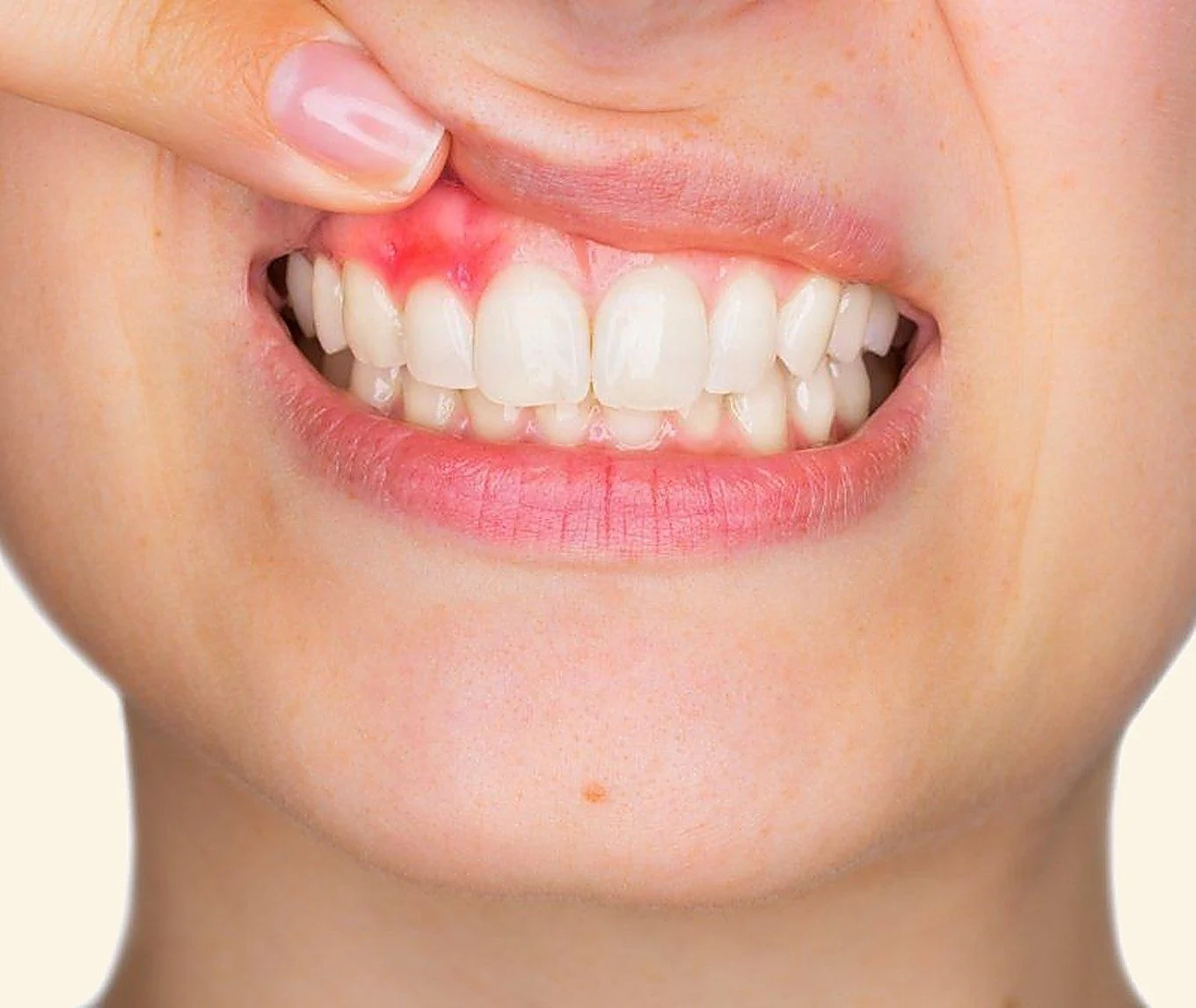
Gum disease treatment – red, swollen and inflamed gum above a front tooth, an early sign of gum disease

What gum disease is

Your teeth are only as good as what holds them.

Gum disease, doctors call it periodontal disease, is an infection in the gums and bone around your teeth. It is very common, and it is often quiet.

Think of a tooth like a fence post. The tooth is the post. The gum and the bone around it are the ground it stands in. You can have a perfect post, but if the ground washes away, the post falls over. Gum disease is the ground washing away.

It starts with a sticky film of germs called plaque. Left on the gum line, it makes the gums red and puffy, and they bleed when you brush. That stage is called gingivitis, and with a proper cleaning and good home care it can usually be reversed. If it carries on, the infection moves under the gum and starts eating the bone. That stage is called periodontitis, or advanced periodontal disease, and it is a leading reason adults lose teeth.

The part that catches people out: it barely hurts. Most people have no pain until the teeth are already loose, so bleeding when you brush is not a small thing to ignore. For most people it is the only early warning they get.

Gum disease, start to finish

Three things worth knowing.

What is going on in your mouth, what we do about it, and why gums matter to the rest of you. In plain words.

Gingivitis & periodontitis

How to tell if you have it.

Gum disease has two stages. The first one usually responds well to treatment. The second one cannot be fully undone, but it can be stopped. Knowing which one you are in is the whole point of the first visit.

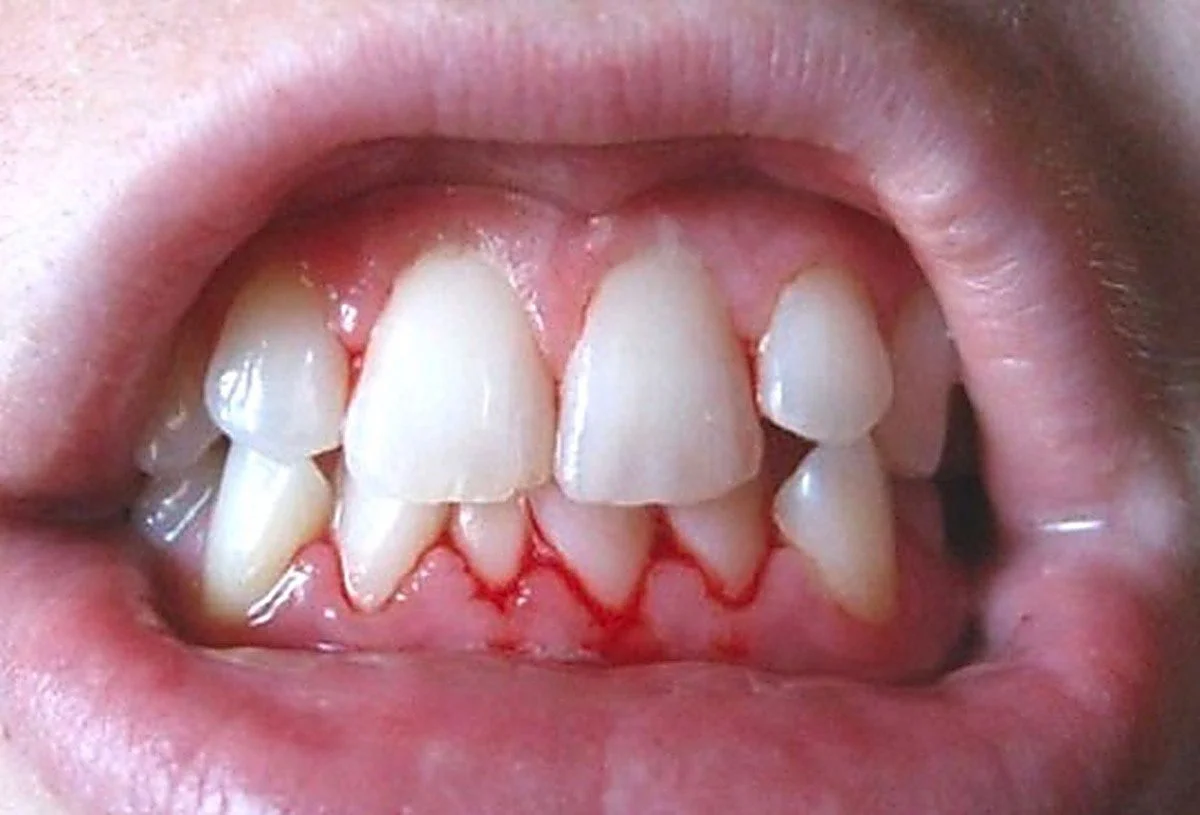
Inflamed, bleeding gums between the lower front teeth, a clear sign of gum disease

Signs to look for

  • Pink in the sink when you brush or floss
  • Gums that look red and puffy instead of firm and pale
  • Bad breath that will not go away
  • A bad taste in your mouth
  • Receding gums, meaning gums pulling back so the teeth look longer
  • Teeth that feel loose, or have moved
  • Sore gums, or gums that hurt when you eat

Stage one

Gingivitis

The mild stage. Your gums are red, puffy and bleed easily. There is usually little or no pain.

The good news: this stage usually responds well to treatment. A proper cleaning, plus consistent brushing and flossing at home, and most gums return to health. At this stage, nothing is typically lost for good.

Stage two

Periodontitis

If gingivitis is left untreated, the infection can spread under the gum line. Your body fights back, and in the process it can break down its own bone and tissue.

The gum can pull away from the tooth and leave a gap. Over time that gap can get deeper, and eventually the tooth can loosen. Bone that has been lost does not grow back on its own, but we can work to stop the damage from progressing, and in some cases rebuild part of what was lost.

The measurement

What a “pocket” is

The gap between the gum and the tooth is called a pocket. We measure it with a tiny ruler, in millimetres, around every tooth.

Healthy is about 1 to 3 mm. Four and above means the gum has come away and germs are living somewhere your toothbrush cannot reach. Those numbers are how we track whether treatment is working.

The cause

Plaque and tartar

Plaque is the soft, sticky film of germs that builds up on teeth every day. Brushing removes it. Left alone for a day or two it hardens into tartar, which is rock solid and stuck fast.

You cannot brush tartar off. It has to be scraped off by us. And while it sits there, it keeps the germs pressed against your gum.

Honest answer

Will it go away by itself?

Gingivitis often does, once the plaque is cleaned off and you keep on top of it at home.

Periodontitis usually does not. Once bone is gone it typically does not come back on its own, and the pockets are often too deep for a toothbrush to reach. Waiting tends not to help. It tends to get deeper.

Why it is so easy to miss. Gum disease is often nearly painless until it is advanced. Many people feel fine right up until a tooth starts to move, which is why bleeding gums matter so much. For most people, it is the only warning they will get, often years before the trouble does.

Get your gums checked and measured

Deep cleaning, laser & gum surgery

What we actually do about it.

Treatment depends on what the exam finds, not a fixed script. We start with the least invasive option that fits your diagnosis, and many patients need nothing beyond a thorough cleaning.

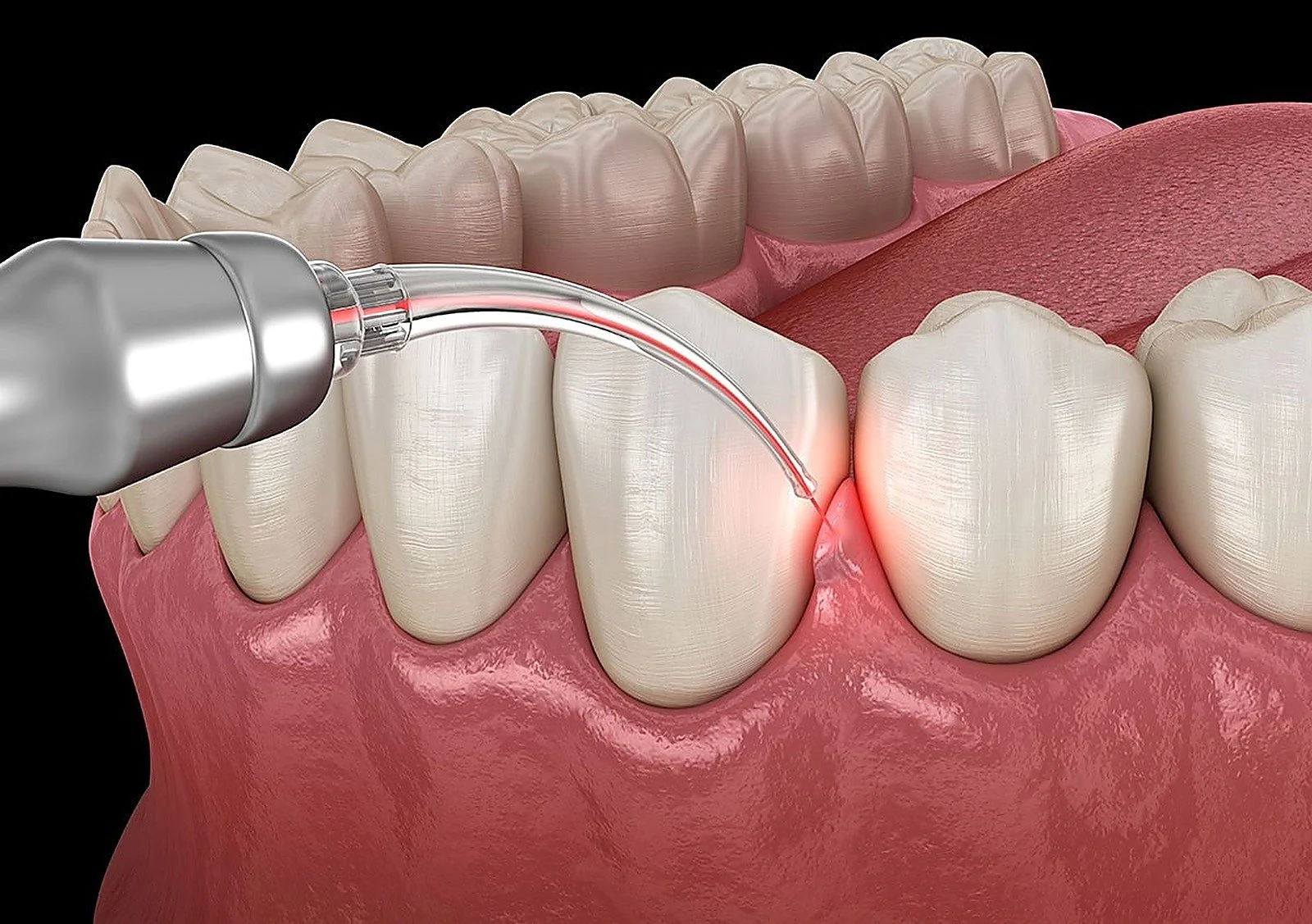
Laser gum treatment, a dental laser clearing infected tissue from the pocket between two teeth

Nonsurgical

A deep clean

The proper name is scaling and root planing. A normal cleaning covers the part of the tooth you can see. This one goes below the gum line.

We remove hardened tartar from under the gum, then smooth the root so germs have less to grip. This gives the gum a chance to heal back against the tooth. Your mouth is numbed first, and it is not surgery.

Adjunct

Medicine in the pocket

In some cases we place a small dose of antibiotic directly into a deep pocket after cleaning it, so it sits where the germs are rather than circulating through the whole body as a pill would. It is used alongside cleaning, not instead of it.

Adjunct, not a replacement

Laser gum treatment

A laser can help clear infected tissue using light instead of a blade, and for some patients it means less cutting, bleeding and swelling than traditional surgery. It is a tool we use alongside standard cleaning and treatment, not a substitute for it.

Your mouth is numbed, so it should not hurt. Whether laser treatment is appropriate depends on how advanced the disease is and your overall health, which is why it follows an exam rather than a standing recommendation.

Surgical option

Pocket reduction surgery

Also called osseous surgery, this is considered for pockets too deep to clean nonsurgically. We lift the gum back, clean out the infection underneath, and smooth the damaged bone so the gum can sit more closely against the tooth again.

The gum is repositioned and held with a dressing. The goal is to make the pockets shallow enough for a toothbrush to reach and maintain.

Surgical option

Gum grafting

If gums have receded and left roots exposed, a graft can cover them again. We take a small amount of tissue from the roof of your mouth, or use donor tissue, and place it over the exposed root.

It can help with sensitivity, protect the root from decay, and improve the appearance of the smile, though results vary by case. More on gum grafting →

Surgical option

Bone grafting

Where infection has broken down bone, grafting material can be placed to help rebuild the area, giving a tooth firmer support. If a tooth has already been lost, it can also help prepare the site for a future implant.

Also

Trimming overgrown gum

Some people develop excess gum tissue, sometimes as a side effect of medications for blood pressure or epilepsy, or after a transplant. Trimming it back is called a gingivectomy.

It reduces the pockets that overgrown gum can create, and it can make the teeth easier to keep clean.

Also

Fixing the bite

If your teeth do not meet evenly, a few of them can take most of the force, and that extra pressure can loosen teeth faster once the gums are already weakened.

Depending on the case, we may reshape the biting surfaces slightly, splint wobbly teeth together for support, or provide a night guard if you grind. This practice also evaluates jaw joint problems as part of that check.

Comfort & cost

Sedation, and what it comes to

Sedation is available for treatment, including a deep cleaning, if you are anxious about the visit. Tell us when you book rather than on the day.

Cost depends on how many areas need treating and how deep the pockets are. Gum treatment is covered by most dental plans, and we check your benefits and give you a figure before anything is scheduled.

Ongoing

Staying ahead of it

Once gums have been treated, keeping them healthy usually means periodontal maintenance cleanings, often every three to four months instead of the usual six, along with good home care.

This is not a sign the first treatment failed. It reflects that treated gums stay more prone to the disease returning, so the recall schedule is adjusted to protect the result.

Afterwards. Expect sore gums for a few days. Ibuprofen usually handles it, often 400 to 600 mg every six to eight hours, or Tylenol if you cannot take ibuprofen. We will write down exactly what applies to you. If pain is severe or something feels wrong, call us rather than waiting it out.

Find out what your gums need

Your gums & the rest of you

It does not always stay in your mouth.

Gum disease is an infection, and it does not always stay contained to the mouth. Germs from deep pockets can enter the bloodstream, and researchers have linked that to inflammation elsewhere in the body.

Very common

How many people have it

According to the CDC, close to half of American adults over 30 have periodontitis, the advanced stage. It is more common in men, at roughly 56 in 100, compared with 38 in 100 for women.

It can happen at any age, including in children. If you have it, you are in very ordinary company.

Heart

Study after study has linked gum disease to heart disease. Nobody has proved that one causes the other, and we will not tell you it does. What is clear is that the inflammation from infected gums does not help a heart that is already under strain.

Diabetes

This one runs both ways. Gum disease can make blood sugar harder to control, and poorly controlled blood sugar can make gum disease more likely and more aggressive.

Treating the gums often helps the numbers. If you are diabetic, let us know, since it changes how closely we monitor you.

Pregnancy

Studies have linked gum disease in pregnancy to a higher risk of early delivery or lower birth weight, though it is one factor among many. Hormones during pregnancy also make gums more reactive, so they can bleed more easily than usual.

A gum check during pregnancy is a sensible, simple thing to do. Treating an infection is generally safer than leaving it.

Lungs

Germs from the mouth can be breathed into the lungs, and in people who already have gum disease, that has been associated with a higher risk of chest infections, including pneumonia.

Bones and other links

Osteoporosis thins bone everywhere, including the jaw that holds your teeth, so the two problems make each other worse. Researchers have also found higher rates of some cancers in men with gum disease, and a link with prostate inflammation.

These are associations, not proven causes. We mention them because they are real findings, not to frighten anyone.

Women

Hormones make a difference

Gums react more strongly at puberty, during pregnancy and around menopause. Some women get sore, bleeding gums in the days just before a period, which settles once it starts.

None of that means you are doing anything wrong. It means the cleaning routine has to work a bit harder at those times.

Children

Children get it too

Signs in a child are the same: bleeding gums, bad breath, puffy red gums, or gums pulling back. Most of it is mild gingivitis and easily fixed.

Rarely, an otherwise healthy young person gets an aggressive form that takes bone quickly. That one needs a specialist, and it needs one early.

Keeping it away

What actually works

  • Brush twice a day, and clean your tongue too
  • Floss once a day. This is the step most people skip, and it is the one that reaches the gum line
  • Stop smoking. It is one of the biggest things you can change
  • Get a check-up and a cleaning on schedule, not just when something hurts
  • Start children early, with toothpaste from around a year old and flossing once the gaps close
About bad breath. It is one of the most common reasons people finally book, and gum disease is one of the most common causes. Brushing your tongue, drinking water, chewing sugar-free gum and quitting tobacco all help. Mouthwash generally does not, since it tends to cover the smell for an hour without addressing what is causing it.

Book a gum check, it takes one visit

One appointment

One visit tells you where you stand.

We measure the gums around every tooth, take X-rays of the bone, and show you the numbers. Then you know whether this calls for a cleaning, laser treatment, or something more, and what it costs, before anything is booked.

Southaven, MS · serving Memphis & the Mid-South · sedation available

Trusted & recognized

Gums in experienced hands.

The credentials behind every gum we treat.

Voted DeSoto's Best 8 years in a row 2018 to 2025Voted DeSoto's Best, 8 years in a row 2018 to 2025
Selected Face of Dental Implants 9 years in a row 2018 to 2026Selected Face of Dental Implants, 9 years in a row 2018 to 2026
Voted Memphis best periodontist 2 timesVoted Memphis best periodontist 2 times
American Board of Periodontology, Board CertifiedMidsouth's only Board Certified Dual Specialist
Voted Top Dentist 7 years in a row 2020 to 2026Voted Top Dentist, 7 years in a row 2020 to 2026
30 Years of Clinical Experience30 Years of Clinical Experience

Step by step

How it works.

Four steps, start to finish.

1

We measure your gums

A small probe checks the gap around every tooth, and we write down the numbers. X-rays show how much bone is left. It does not hurt, and it takes one visit.

2

You see the numbers

We show you the chart and the X-rays: which teeth are fine, which are in trouble, and how bad it is. No jargon and no scare tactics. If your gums are healthy, we will simply say so.

3

The plan, and the price

The plan depends on what the exam finds, and we start with the least invasive option that fits your diagnosis. We check your insurance and tell you the cost before you agree to anything.

4

Treatment, then a re-check

You are numbed throughout, and sedated if you want it. A few weeks later we measure everything again, since that is how we track whether treatment is working.

Your surgeons

Who will be treating you.

Both board-certified. Both operating here every week.

Dr. Pradeep Adatrow
Dr. Pradeep Adatrow
DDS, MSD · Periodontics & Prosthodontics

A former University of Tennessee professor and program director, and the only board-certified periodontal and implant surgeon who is also a prosthodontist in the southern United States. Degrees from the University of Alabama and the University of Tennessee, with postdoctoral training at Indiana University. That combination is why the conversation about removing a tooth and the conversation about replacing it happen in one room, with one person. Fellow of the International College of Dentists.

Learn more →
Dr. Jay Patel
Dr. Jay Patel
DDS, MPH · Board Certified Periodontist

Board-certified in periodontics, with his dental degree from USC's Ostrow School of Dentistry and postgraduate surgical training at the University of Pittsburgh. Dr. Patel works with a deliberately light touch on soft tissue, the quality that counts for most on a frenectomy, and on any extraction where the bone has to survive intact for an implant later.

Learn more →

The difference

Why people drive here for it.

Smaller operations are often where details get missed. These are the ones we try hard not to miss.

  • Gums are the speciality here, not a side service. Dr. Adatrow is board-certified in it, with thirty years behind him.
  • We measure every tooth and show you the numbers, then measure again afterward to track how treatment is working.
  • We start with the option that fits your diagnosis, which is often nonsurgical. Many people never need surgery at all.
  • Laser treatment where it suits the case, which can mean less cutting, less bleeding and less swelling.
  • If bone or gum has been lost, we can often help rebuild part of it, and place an implant too if a tooth has gone.
  • Sedation is available for any of it, including a deep clean, if dental visits make you anxious.
4.9★
Rated across 1,900+ reviews
30+
Years of clinical experience
2
Board-certified specialties

Gum disease treatment

Treating bleeding gums and gum disease in Memphis and Southaven.

Signs worth getting checked

Gums that bleed when you brush, gums that look red or swollen, bad breath that will not go away, gums pulling back from the teeth, or teeth that feel loose can all be signs of gum disease (periodontitis). It is often painless until it is advanced, so an exam matters.

Non-surgical treatment first

Most gum disease is treated without surgery. Scaling and root planing (a deep cleaning below the gum line) removes the tartar and bacteria in the pockets around your teeth. In selected cases we add laser therapy.

When surgery helps

If deep pockets or recession remain after deep cleaning, options include pocket reduction surgery, gum grafting and crown lengthening. Afterwards, periodontal maintenance visits every three to four months keep the disease under control.

Specialist gum care near you

Dr. Pradeep Adatrow is a board-certified periodontist. Patients come to our Southaven, MS office from Memphis, Collierville, Germantown and DeSoto County. Sedation is available for anxious patients.

Why Southaven patients choose a specialist for gum disease treatment

Treating gum disease is what a periodontist trains for. In Southaven you see a board-certified periodontist directly, for deep cleaning, laser therapy, regeneration or grafting, instead of being referred on from a general practice. Free consultation, financing and most dental insurance accepted.

Good to know

Questions people ask.

Can gum disease be treated without surgery?

Often, yes. Scaling and root planing (a deep cleaning below the gum line) is the first step for most patients, sometimes with laser therapy. Surgery is only needed if deep pockets remain.

Why do my gums bleed when I brush?

Bleeding gums are one of the most common early signs of gum disease. A periodontal exam shows whether treatment is needed.

Is a deep cleaning the same as a normal cleaning?

No. A normal cleaning polishes the part of the tooth you can see. A deep cleaning goes below the gum line to remove hardened tartar from the root, and your mouth is numbed for it. It usually takes two visits, one side at a time.

Will it hurt?

You are numbed, so the treatment itself should not hurt. Gums are often sore for a few days afterward, and ordinary pain relievers usually handle it. If you are anxious about the visit, ask about sedation when you book.

How many visits will I need?

A deep cleaning is usually two visits. We recheck the gums several weeks later to measure whether the pockets have improved. If they have, you move to a maintenance schedule. If they have not, we discuss what comes next.

Can I keep my teeth?

Often, yes, even teeth that feel a little loose. It depends on how much bone support remains, which is exactly what the first exam measures. We would rather treat a tooth than remove it, and we will tell you honestly when a tooth cannot be saved.

Do I have to keep coming back forever?

Once you have had periodontitis, you are more prone to it returning, so most patients move to cleanings every three or four months instead of every six. It is not a punishment. It is what tends to protect the result.

I brush twice a day. How did I get gum disease?

Brushing alone misses the gum line between teeth, which is exactly where gum disease often starts. Smoking, diabetes, hormonal changes, certain medications and genetics can all play a part too. It is very often not about how well you brush.

Does insurance cover treatment?

Coverage varies by plan. Many dental plans contribute to gum disease treatment, often more generously than for cosmetic work, since it is medically necessary. Bring your details and we will check your benefits before you commit to anything.

Do you see patients from outside Southaven?

Regularly, from Memphis, Germantown, Collierville, Bartlett and Cordova; from Olive Branch, Hernando, Horn Lake, Batesville, Senatobia, Holly Springs and Clarksdale; and from West Memphis, Marion, Forrest City and Brinkley.

Book an appointment

Let’s take a look.

You do not need to know what stage you are at before you come in. Tell us what is going on, whether that is gums that bleed when you brush, breath you have stopped mentioning, or a tooth that has started to feel loose. Bring any X-rays if you have them, and a real person on our team will call you back.

Call or text · (662) 655-4868

Email · info@adatmj.com

Address · 7135 Getwell Rd, Suite 100, Southaven, MS 38672

Hours · Mon to Wed, 8am to 5pm · Thu and Fri, 7am to 3:30pm

Get directions

7135 Getwell Rd, Suite 100
Southaven, MS 38672

Request a consultation

Please tell us your name.
Please add a number we can reach you on.
That email doesn't look right.

Your details stay with us. Never shared, never sold. Requesting a time commits you to nothing.