
Sedation, properly offered
Discussed at the consultation, not sprung on you in the chair. For anxious patients it can be the difference between having the procedure and postponing it.
Surgical dentistry, guided by diagnosis.
Failed root canals, tongue-ties and lip-ties: three different problems, each addressed on its own diagnosis. A board-certified surgeon performs every procedure, and sedation is available when appropriate.
Read more about crown lengthening to save a broken tooth or correct a gummy smile.
What brought you here
What surgical dentistry means here
Before recommending a procedure, we ask what problem we are solving and whether a less invasive option is reasonable.
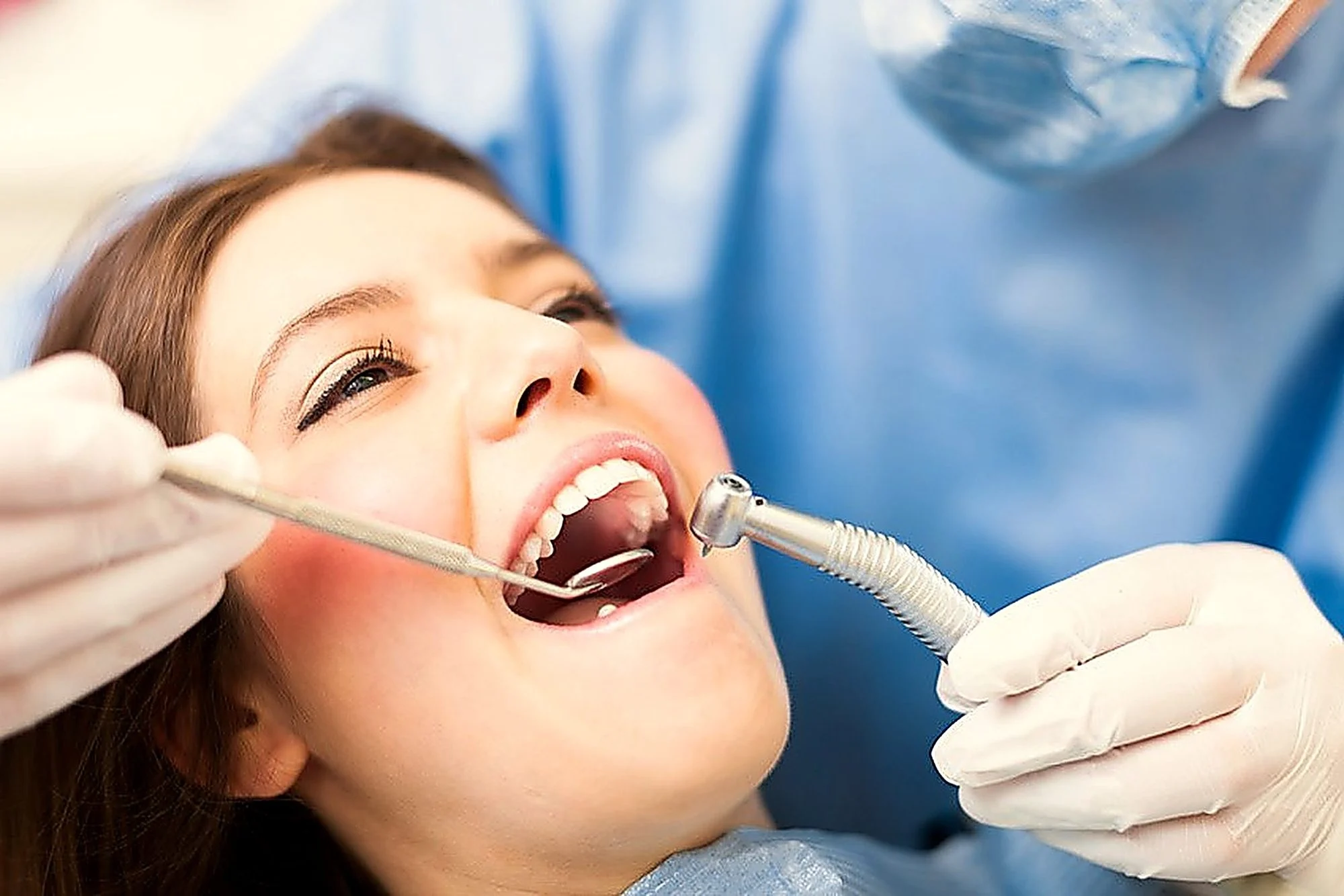
Surgical dentistry covers procedures that go beneath the surface: treating the tip of a root a root canal could not reach, releasing a band of tissue that is tethering a tongue or a lip, or removing a tooth that cannot reasonably be saved. These address different conditions with different diagnoses, and we do not group them together simply because each involves surgery.
Where a tooth has a reasonable restorative and periodontal prognosis, we look at whether it can be rescued at the root tip, or by exposing sound structure beneath the gum. When a tooth genuinely has to come out, that is its own subject: wisdom teeth and extractions have a page of their own.
Why here
Nine things that change when a specialist does the small operations.
Discussed at the consultation, not sprung on you in the chair. For anxious patients it can be the difference between having the procedure and postponing it.
We look for the option that keeps the tooth first: root tip surgery, exposing sound structure, a rebuild, and extract only when the tooth cannot reasonably be kept.
Removal and the plan to replace it happen in the same conversation with the same specialist. No referral letter, no starting over somewhere else.
For selected tongue-tie and lip-tie procedures, a soft-tissue laser can vaporise tissue rather than cut it, which may mean less bleeding and fewer sutures. Conventional technique can also give excellent results, and we choose based on age, anatomy and the specific case.
X-rays and 3D imaging show root shape, bone and nerve position before anything begins. Curved roots and impacted teeth stop being surprises.
How a tooth comes out decides how much bone is left behind. Careful technique protects the site for an implant later.
Written instructions, prescriptions where needed, and a real phone number. The first 72 hours decide most of your recovery, so we do not leave them to guesswork.
An infant tongue-tie release takes seconds and needs no general anaesthetic. Most babies can feed shortly after, with you back in the room the moment it is done.
What your dental plan covers, what your medical plan may cover, and what it will actually cost: before you commit, not after.
The procedures
Every one of them is on this page in full: nothing hidden, nothing summarised away. They are three genuinely different operations, with three different recoveries.
Apicoectomy · root end surgery
From apico, the apex or end, and ectomy, removal. The tip of the tooth root is cut away and the end sealed: a minor surgery that may be considered when a tooth would otherwise need extraction.
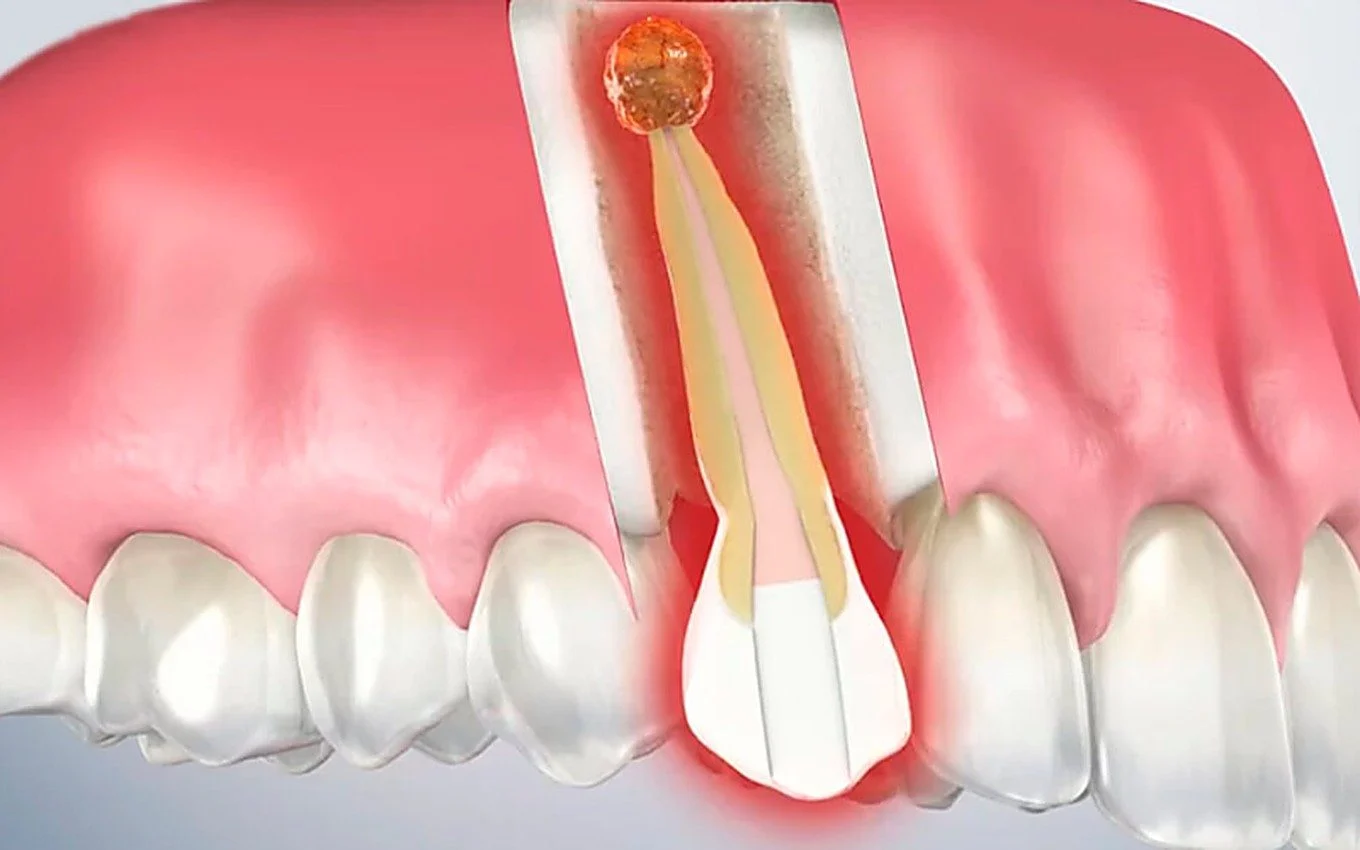
A root canal cleans the canals from inside the tooth downward. Sometimes inflammation or infection persists at the apex, the very end of the root, where that approach cannot reach.
The surgery approaches the root tip from outside, through the gum, when nonsurgical retreatment is not the preferred option and the tooth has a reasonable restorative and periodontal prognosis.
Step by step
Timing
Between 30 and 90 minutes, depending on which tooth and how much infection has to be cleared. Most patients resume daily activities the next day.
Some pain and swelling in the first days is normal and decreases steadily from there.
Afterwards
Tongue-tie · ankyloglossia
A short, thick or tight lingual frenulum that failed to separate from the tongue before birth, usually genetic, tethering the tip of the tongue to the floor of the mouth. It looks completely different depending on when it is caught, and appearance alone does not determine whether treatment is necessary.
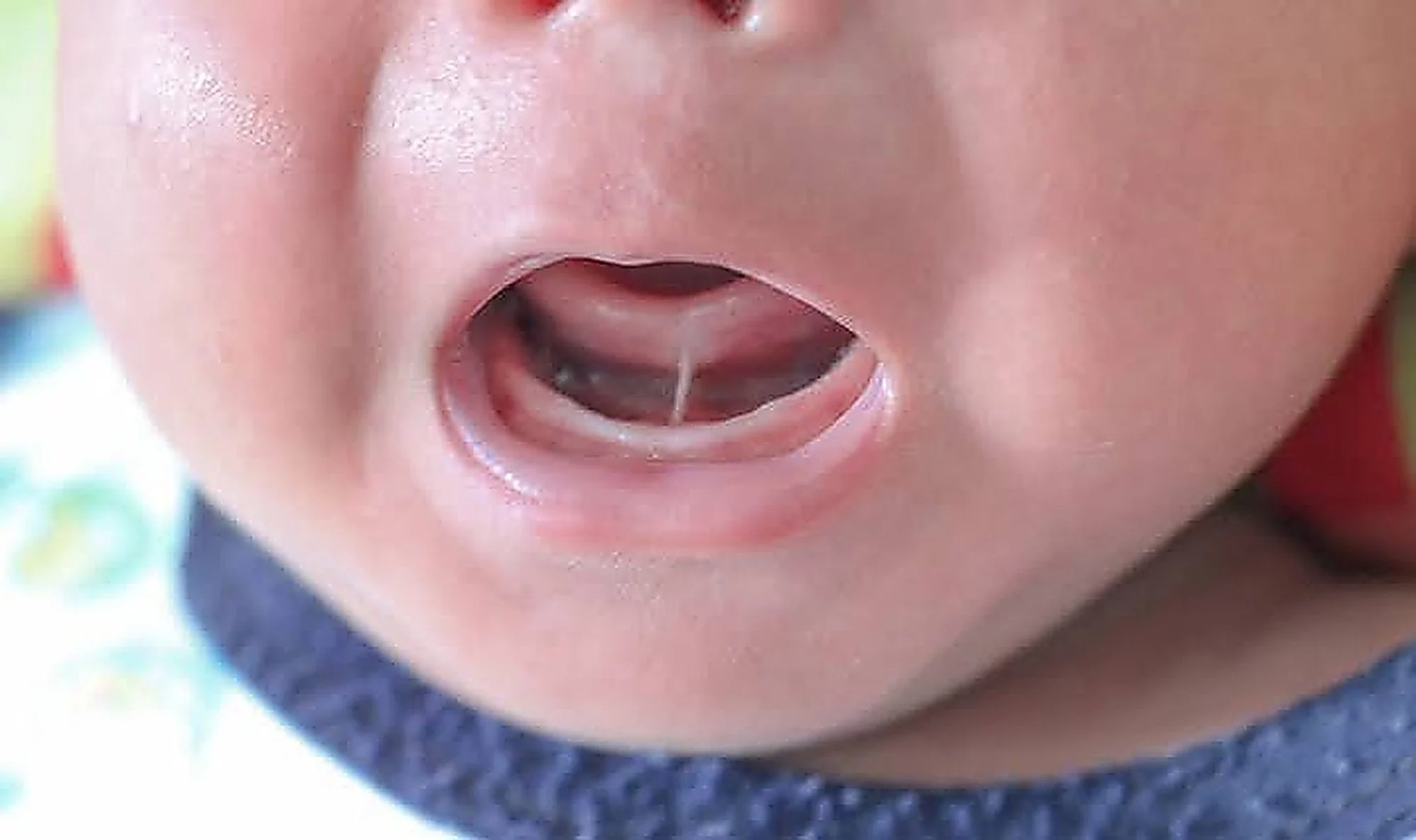
In a baby
These signs can have several causes, and tongue-tie is only one of them. Feeding difficulty is best evaluated together with your pediatrician and a qualified lactation or feeding professional.
In a young child
A heart-shaped tongue, or a notch at the tip, is the classic visible sign at any age.
In adulthood
An untreated tongue-tie has been associated with several conditions, though association is not the same as proven cause:
This practice also treats TMJ, so it is a connection we see more often than most offices, and one reason we take an untreated adult tie seriously rather than dismissing it.
Honestly
No, and experts genuinely disagree. Some doctors and lactation consultants advise releasing a tie as early as possible, even before a newborn leaves the hospital. Others prefer to wait and watch.
In many cases the frenulum softens on its own. Breastfeeding can often be improved with a lactation consultant, and speech sounds with a speech-language pathologist. If that is your situation we will say so plainly rather than book you in.
Technique one
The straightforward release. The frenulum is examined and divided with sterile scissors, with or without anaesthetic. Because the tissue carries few nerve endings and few blood vessels it is quick and generally well tolerated, and the bleeding is usually a drop or two.
Infants can breastfeed immediately afterwards. Complications are rare, but bleeding, infection, damage to the tongue or salivary glands, scarring and reattachment are all possible.
Technique two
When the frenum is too thick for a frenotomy, the more involved option: surgical instruments under general anaesthesia, with the wound closed using self-absorbing sutures.
Because it is more invasive, scarring and anaesthetic reactions join the same risk list. Tongue exercises afterwards improve movement and reduce scarring.
Technique three
A soft-tissue laser uses light energy to vaporise the tissue rather than cut it. It sterilises on contact, which may lower infection risk, and it can promote faster healing at the site.
Conventional technique can also give a good result. We choose the laser for selected cases based on age, anatomy and tissue thickness.
For parents
The release itself takes about 10 to 15 seconds. Research and our own experience put the fussiness at roughly the level of a routine vaccination.
Feed before you come only if the procedure is on another day. Feeding immediately beforehand risks regurgitation. For safety we ask you to wait in reception during the release, with protective eyewear on the baby, and our staff bring you through the moment it is done.
The days after
Some babies sleep more, feed in shorter and more frequent sessions, and drool more than usual. As the soreness fades the tongue adjusts and the latch usually improves.
The tongue may need time, or therapy, to strengthen the oral musculature. Minor bleeding during the stretching exercises we teach you is not a concern, and the drooling settles as the wound heals.
Frenectomy · lingual, labial & buccal
A frenum, or frenulum, is a small ridge or fold of tissue that anchors a semi-mobile part of the body. There are three in the mouth that can cause trouble, and a frenectomy removes or loosens the one that is doing it.

Anatomy
Lingual
Removal of the frenulum attaching the underside of the tongue to the floor of the mouth: the standard treatment for ankyloglossia, tongue-tie. It is not only an infant procedure: releasing a restrictive lingual frenum improves speech, swallowing and tongue movement at any age.
Labial
The band between the upper lip and the gum. When it attaches too close to the teeth it can hold a gap open between the front teeth, and drag at the gum margin, contributing to recession. Release removes the force contributing to both, though the degree of improvement varies by case.
Buccal
Removal of the thick tissue connecting cheek to gum, and repositioning of the frenum. Usually done for denture stability: a buccal frenum that pulls can unseat a denture when you speak or chew.
A gap between the upper front teeth is not always the frenum, for what it is worth: it can also be small teeth, or a large jaw. We check which before recommending anything.
Conventional
Quick, well established, and it does require the local anaesthetic.
Laser
A laser can replace the blade for selected cases. It may cause less irritation, swelling and bleeding than a scalpel, and it can reduce or remove the need for sutures, and sometimes for local anaesthetic, depending on the case.
Our WaterLase system combines a water stream with laser-generated energy, which allows it to remove decay, reshape bone and re-contour gum tissue with precision. Conventional instruments can also give excellent results, so the right technique depends on the specific case.
Eligibility
Almost everyone is. The exceptions are patients with severe periodontal disease or serious general health complications: there, the gum condition is treated first and the frenectomy follows.
Beforehand we review your medical history and X-rays to assess the condition of the teeth and bone, and you tell us every medication you take, because some of them mean adjusting the plan before we begin.
One appointment
The root canal that never settled. The baby who cannot latch. The lip tie holding a gap open. We image it, tell you what we find, and lay out sedation and cost before anything is booked, and we will tell you when the answer is to leave it alone.
Southaven, MS · serving Memphis & the Mid-South · sedation available
Trusted & recognized
The credentials behind every procedure on this page.

Voted DeSoto's Best, 8 years in a row 2018 to 2025

Selected Face of Dental Implants, 9 years in a row 2018 to 2026

Voted Memphis best periodontist 2 times
Midsouth's only Board Certified Dual Specialist

Voted Top Dentist, 7 years in a row 2020 to 2026

30 Years of Clinical ExperienceStep by step
The same five stages whichever of the four brought you here.
X-rays and, where it matters, 3D imaging: root shape, bone level, nerve position, how deep an impacted tooth actually sits. We take your medical history and the full list of what you are taking, because both change the plan. Bring your questions about sedation to this appointment rather than the next one.
Whether the tooth can be kept, and if it cannot, what replaces it. Sedation options are laid out here along with what your dental plan and your medical plan are each likely to cover: for tongue-tie those two answers are usually different. Nothing gets booked until the whole picture is in front of you.
An apicoectomy runs 30 to 90 minutes. A frenectomy is 15 minutes or less, and an infant laser release is over in 10 to 15 seconds. Local anaesthetic throughout, sedation if you have chosen it, stitches only where they are actually needed.
Rest for two to three days. Sleep propped at roughly 45 degrees rather than flat. Ice on and off in 20-minute cycles for the first two days. Take what we prescribe on the schedule we give you, and do not smoke. If you were sedated, expect drowsiness on and off for up to a week. That is normal, and it passes.
Stitches out within a week or so. After an apicoectomy the bone keeps filling in over the following months, long after you feel normal. After an infant release, we check the latch and go through the stretching exercises with you.
At a glance
The answers people want on the phone before they will book anything.
Your surgeons
Both board-certified. Both operating here every week.

A former University of Tennessee professor and program director, and the only board-certified periodontal and implant surgeon who is also a prosthodontist in the southern United States. Degrees from the University of Alabama and the University of Tennessee, with postdoctoral training at Indiana University. That combination is why the conversation about removing a tooth and the conversation about replacing it happen in one room, with one person. Fellow of the International College of Dentists.
Learn more →

Board-certified in periodontics, with his dental degree from USC's Ostrow School of Dentistry and postgraduate surgical training at the University of Pittsburgh. Dr. Patel works with a deliberately light touch on soft tissue, the quality that counts for most on a frenectomy, and on any extraction where the bone has to survive intact for an implant later.
Learn more →The difference
Small operations are where corners get cut. These are the ones we don’t cut.
Periodontal surgery
A gum graft covers exposed roots, reduces sensitivity and protects teeth from further recession. Tissue usually comes from the roof of your mouth or a donor material.
Reshapes gum and bone so a broken tooth can be restored or a gummy smile corrected. See crown lengthening.
Rebuilds bone so a dental implant has something solid to hold, or preserves a socket after an extraction.
For advanced gum disease, reducing deep pockets makes the area easier to keep clean and helps stop bone loss.
Surgery is done by a board-certified periodontist with sedation available. Patients come to our Southaven, MS office from Memphis, Collierville and DeSoto County.
Periodontal surgery is specialist work. Southaven and Memphis patients are treated directly by a board-certified periodontist, with sedation options and a written plan and estimate before surgery. Free consultation, financing and most dental insurance accepted.
Good to know
Apicoectomy
A procedure that covers exposed tooth roots with new gum tissue to reduce sensitivity and stop further recession.
If the jawbone has shrunk where a tooth was lost, a bone graft rebuilds it so the implant is stable.
A minor surgical procedure in which the tip of the tooth root is cut away and the end sealed. The name comes from apico, meaning apex or end, and ectomy, meaning removal. It is done through the gum rather than through the top of the tooth.
Because infection has persisted after root canal treatment, which means the conventional approach has not been sufficient. It is also the option when a crown or bridge on the tooth makes retreatment through the top impractical, or when a retreatment has already been attempted without success.
A root canal treats the tooth itself, cleaning the canals from the inside downward. An apicoectomy addresses the root tip, reaching it through the gum from outside. Different target, different route, which is why it can help when the first approach did not resolve the infection.
Typically 30 to 90 minutes. Most patients resume normal activities the next day, with pain and swelling decreasing steadily after that. Ibuprofen usually manages the discomfort, we may prescribe antibiotics, and stitches come out within a week. Brush carefully near the site while it heals. The bone underneath keeps filling in for months.
Published success rates for this procedure vary across an enormous range, and that spread reflects the surgeon and the technology far more than it reflects the patient. Outcome depends on the diagnosis, tooth anatomy, cracks, previous treatment, periodontal support, restorative condition and surgical findings. Rather than quote a single number, we discuss the prognosis for your particular tooth, including telling you when extraction is the better bet.
The sealing materials used, whether you want sedation, and how extensive the defect is. Dental or medical insurance may cover part of it, and we will help you verify that with your provider before you commit.
Tongue-tie & infants
Ankyloglossia, a congenital condition in which a short, thick or tight band of tissue, the lingual frenulum, tethers the tip of the tongue to the floor of the mouth and limits its range of motion. It happens when the frenulum fails to separate from the tongue before birth, and it is usually genetic. It can interfere with breastfeeding and bottle feeding, and it can affect how a child eats, speaks and swallows. It is normally an isolated condition, though occasionally it appears alongside other syndromes.
No, and experts genuinely disagree about this. Some doctors and lactation consultants advise releasing a tie as early as possible, even before a newborn leaves the hospital; others prefer to wait and observe. In many cases the frenulum gradually softens on its own. A lactation consultant can often improve breastfeeding without surgery, and a speech-language pathologist can help with speech sounds. If that is your situation, we will say so.
The release takes about 10 to 15 seconds. Research and our own experience put the fussiness at roughly the level of a routine vaccination, and modern laser technique keeps it there. Bleeding is usually a drop or two, and there is no general anaesthetic involved.
Yes, but if the release is happening at that same visit, wait until afterwards. Feeding immediately beforehand risks regurgitation and aspiration of milk. You can feed straight after the procedure, and we encourage it.
We ask parents to wait in reception for the release itself. It lets the doctor focus entirely on the procedure, which is what keeps it as quick as it is, and your baby wears protective eyewear throughout. Our staff bring you through the moment it is finished so you can comfort and feed straight away. A lot of mothers notice the difference in that first feed.
Some babies sleep more than usual, feed in shorter and more frequent sessions, and drool more for a while. As the soreness fades the tongue adjusts and the latch usually improves. It may need time, or therapy, to strengthen the oral musculature. A little bleeding during the stretching exercises we teach you is normal, and the drooling settles as the wound heals.
A frenotomy divides the frenulum with sterile scissors: quick, minimal bleeding, feeding straight afterwards. A frenuloplasty is the more invasive option when the frenum is too thick for that: surgical instruments under general anaesthesia, closed with self-absorbing sutures, with tongue exercises afterwards to improve movement and reduce scarring. A laser release vaporises the tissue with light energy instead of cutting it, which can mean little to no bleeding, usually no sutures, often no general anaesthetic, faster healing in many cases, and a low chance of reattachment. The right technique depends on age, anatomy and the specific case.
It combines a stream of water with laser-generated energy, which is what lets it safely and accurately remove tooth decay, reshape bone and re-contour gum tissue. For a frenectomy it means the tissue is vaporised rather than cut. The laser also sterilises on contact, reducing infection risk, and promotes bio-regeneration so the site heals faster.
It has been associated with breathing problems during sleep, including obstructive sleep apnoea; with TMD and TMJ jaw joint pain; with back, neck and shoulder pain; and with migraines or chronic headaches. Because this practice treats TMJ as well, it is a link we encounter regularly rather than one we read about.
There is very little training on tongue and lip ties in medical, dental, nursing or other health-related schools: clinicians who treat tissue ties have to go and seek that education out separately. Dr. Adatrow has pursued additional training in the surgical treatment of oral tissues for more than 30 years, with consistently strong outcomes reported for these procedures. If feeding is not working and nobody has looked, it is worth having looked at.
Many dental plans do not cover it, because tongue-tie is classified as a congenital medical condition rather than a dental one. Medical insurance frequently does cover both the consultation and the procedure for that same reason. We provide a health insurance claim form to submit, and most families receive some form of reimbursement, though we are not in-network with health insurers. Payment is due at the time of service and we discuss every fee before treatment begins.
The anatomy itself is real and has been documented since ancient times, so it is not a fad. But not every visible or tight-appearing frenum requires surgery. Careful diagnosis matters, because feeding, speech, pain and oral-function concerns can have multiple causes.
Frenectomy: lip & cheek
A surgical procedure, typically under local anaesthesia, that removes or loosens the bands of tissue attached in the mouth to improve tongue movement, or to reduce the gap between the upper front teeth. Depending on the case it can be done with a scalpel, with surgical scissors, with electrosurgery, with a cauterising device, with a laser, or a combination. It usually takes 15 minutes or less.
A frenum, or frenulum, is a small ridge or fold of tissue that anchors a semi-mobile part of the body. In the mouth there are three: the lingual frenum under the tongue, the labial frenum connecting the lips to the gum, and the buccal frenum connecting the gums to the inside of the cheeks.
When the lingual frenum is too long or too tight and is affecting tongue function, or when a large maxillary labial frenum attached close to the teeth is creating a gap between the front teeth. It is also recommended where a thick frenum is compromising chewing efficiency or oral hygiene.
Where a thick labial frenum is what holds the diastema open, releasing it removes the force pulling the teeth apart. Whether the gap then closes on its own or needs orthodontic help depends on how wide it is and how long it has been there. Worth knowing: spacing can also come from small teeth or a large jaw rather than the frenum, so we check which before recommending anything.
It can help in selected cases when a frenum interferes with the denture border or seal. Denture stability also depends on ridge anatomy, fit, occlusion, saliva and other factors, so a frenectomy alone does not guarantee a perfect fit.
Most people are. The exceptions are patients with severe periodontal disease or serious general health complications, where those need treating first. Dr. Adatrow evaluates your oral and medical health and recommends the approach that suits your case.
We review your medical history and X-rays to assess the condition of the teeth and bone, and you tell us every medication you currently take, since some of them mean adjusting the plan, and we would rather know beforehand.
A conventional frenectomy excises the tight frenulum with surgical scissors and is quick, well established, and effective, typically requiring local anaesthetic. A laser frenectomy can offer less bleeding, a lower risk of post-surgical infection, and sometimes no need for sutures or local anaesthetic, depending on the case. Conventional instruments can also give excellent results, so we choose the technique based on age, anatomy, tissue thickness, treatment objective, operator experience, and whether suturing or tissue repositioning is needed.
Yes, when appropriate. The level of comfort management depends on age, the specific procedure, medical history, anxiety and safety considerations, and we discuss options at the consultation before anything is booked.
Constantly. Patients travel to us from Memphis, Germantown, Collierville, Bartlett and Cordova in Tennessee; from Olive Branch, Hernando, Horn Lake, Batesville, Senatobia, Holly Springs and Clarksdale in Mississippi; and from West Memphis, Marion, Forrest City and Brinkley in Arkansas, across DeSoto, Shelby, Tunica, Marshall and Tate counties.
Book an appointment
Tell us what’s going on: a root canal that didn’t hold, a baby who can’t latch, a lip tie holding a gap open. A real person on our team will call you back.
Call or text · (662) 655-4868
Email · info@adatmj.com
Address · 7135 Getwell Rd, Suite 100, Southaven, MS 38672
Hours · Mon to Wed, 8am to 5pm · Thu and Fri, 7am to 3:30pm
7135 Getwell Rd, Suite 100
Southaven, MS 38672