A precise tool, used where it helps.

Dental lasers are useful tools for selected procedures involving teeth and soft tissues. They can provide precise treatment and may reduce vibration, bleeding, or the need for conventional instruments in some situations. But a laser is not automatically the best tool for every patient or every procedure.

Where would you like to begin

Laser Gum Treatment & Frenectomy in Memphis & Southaven, MS

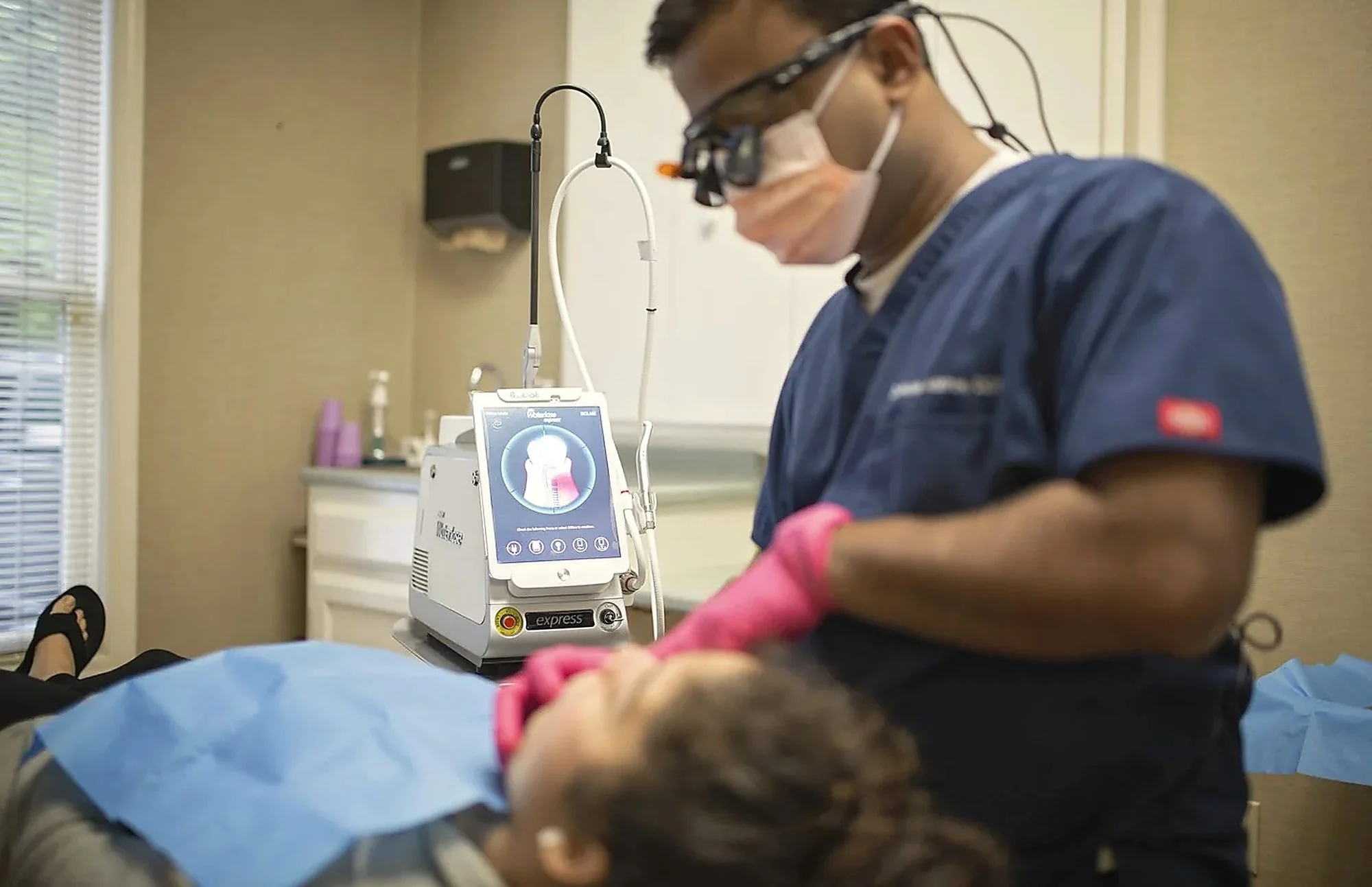
Laser gum treatment – dr. Pradeep Adatrow treating a patient with the Waterlase Express BIOLASE dental laser at Advanced Dental Implant and TMJ Center in Southaven

Precision & efficiency

A useful tool, not a universal fix.

Dental lasers use concentrated light energy to treat selected dental conditions. Whether one is the right choice depends on the diagnosis.

A dental laser delivers concentrated light energy to interact with oral tissues. Different wavelengths behave differently, which is why lasers designed for hard tissue and lasers designed for soft tissue do not all have the same uses.

At Advanced Dental Implant and TMJ Center, we use laser technology when it offers a clinical advantage. The treatment plan is based first on the diagnosis, the tissue being treated, the expected result, and the long-term health of the area.

Why get laser dentistry here: Dr. Adatrow trained intensively at the University of Tennessee and Indiana University hospital in treating gum diseases, performing dental laser therapy and administering sedation. He is the only practising board-certified periodontist and prosthodontist in the southern United States, with more than 30 years of experience.

Laser dentistry, plainly

Three things worth knowing.

What a dental laser is actually for, how it fits into gum disease treatment, and how the Waterlase system works.

What lasers are for, and what they are not

A tool for selected procedures.

Dental lasers deliver concentrated light energy to teeth and soft tissue. They can be precise and may reduce bleeding or the need for some conventional instruments in select cases, but they are not automatically the best choice for every patient or procedure.

Hard-tissue and soft-tissue uses

  • Selected cavity preparation and removal of affected tooth structure
  • Selected procedures involving bone or hard tissue
  • Gum contouring and gingival reshaping
  • Management of selected periodontal tissues
  • Frenectomy and other soft-tissue procedures
  • Gingival depigmentation in appropriately diagnosed cases

Comfort

Are laser dental treatments painless?

Not necessarily. Many patients find selected laser procedures comfortable, and lasers may reduce vibration or bleeding in some situations.

Anesthesia may still be appropriate. We plan comfort around the procedure and the patient rather than promising pain-free treatment.

The basics

What is a dental laser?

A dental laser delivers concentrated light energy to interact with oral tissues.

Different wavelengths behave differently, which is why lasers designed for hard tissue and lasers designed for soft tissue do not all have the same uses.

Sensitivity

Can lasers reduce tooth sensitivity?

Some laser applications may be used for selected sensitivity problems, but sensitivity has many causes, including recession, exposed dentin, decay, cracks, bite-related problems, and pulpal disease.

We first identify the cause, because treating the symptom without understanding why it is present can miss the real problem.

Case selection

Is a laser always the right tool?

Whether a laser is appropriate depends on the specific procedure.

Some treatments are better performed with conventional instruments, and some require a combination of techniques.

Your role

Can I choose laser treatment?

Your preference matters, but the final recommendation depends on the diagnosis and whether a laser is appropriate for the tissue and treatment objective.

We explain the reasonable options and why we recommend one over another.

Safety

Are dental lasers harmful?

Dental lasers are designed for controlled clinical use.

Safety depends on the correct wavelength, settings, training, protective measures, and case selection.

Limitations

What are the drawbacks?

A laser cannot replace every dental instrument or every surgical technique.

Some procedures still require conventional preparation, instrumentation, suturing, or other treatment. Cost and treatment time can also vary.

Cost & coverage

What does laser treatment cost?

Cost depends on the condition and the procedure being performed, not simply on whether a laser is used. We provide an estimate after diagnosis and treatment planning.

Coverage is usually based on the covered procedure and the terms of the plan rather than the device used. Our team helps file claims, but the insurance carrier makes the final benefit decision.

Book an appointment

Gum disease, and how lasers fit in

The laser is a tool inside treatment, not the treatment itself.

Lasers can be used as an adjunct in selected periodontal procedures, but gum disease is not treated by the laser alone. Erbium, Nd:YAG, Diode and CO2 lasers each behave differently, for hard tissue and soft tissue.

Periodontal care

Laser treatment for gum disease

Effective periodontal care begins with diagnosis, measurement of attachment and bone loss, control of plaque and inflammation, removal of deposits, management of risk factors, and long-term maintenance.

If a laser can improve access or tissue management in a particular case, we may incorporate it. If another approach is more predictable, we recommend that instead.

Where it may be used

Procedures a laser may perform

  • Selected cavity preparation and filing
  • Detecting cavities in select cases
  • “Gummy” smile treatment
  • Removing benign tissue growths
  • Cold sore (mouth ulcer) treatment
  • Teeth whitening
  • Treating temporomandibular disorder (TMD)

The four types

What types of lasers are used in dentistry?

The most commonly used dental lasers today include Erbium, Nd:YAG, Diode and CO2. Each type has different biological effects and different uses.

They are generally classified as hard tissue lasers and soft tissue lasers, based on how they interact with different types of tissue. Erbium lasers are typically used for hard tissue; CO2 and Diode lasers are commonly used for soft tissue.

Hard tissue

What are hard tissue lasers used for?

  1. Tooth preparation and filing cavities
  2. Detecting cavities
  3. Reducing tooth sensitivity

Soft tissue

What are soft tissue lasers used for?

  1. Gummy smile treatment
  2. Lengthening a tooth crown
  3. Correcting frenum attachment of the tongue
  4. Removing soft tissue folds related to denture placement
  5. Removing benign tissue growths
  6. Cold sore (mouth ulcer) treatment
  7. Treating sleep apnea by removing excessive tissue growth

Mechanism

How do lasers work in dentistry?

All lasers operate by delivering light energy. For surgical and dental procedures, the laser acts as a cutting tool or a tissue vaporizer.

In teeth whitening procedures, the laser instead serves as a heat source, enhancing the effect of the whitening agents.

Also

What other procedures can lasers perform?

  1. Teeth whitening
  2. Treating temporomandibular disorder (TMD)
  3. Stimulating nerve regeneration

LLLT

What is low-level laser therapy?

Low-level laser therapy (LLLT) is also referred to as low-level light therapy, or photobiomodulation (PBM). It is a low-intensity light therapy.

Its effect is not thermal but photochemical: the light causes biochemical changes in cells, which can be linked to the mechanism of photosynthesis in plants.

Book an appointment

Waterlase, safety & recovery

One of the tools we use, not the whole plan.

Our clinic uses Waterlase, part of the BIOLASE brand, alongside conventional instruments. Which we use depends on the diagnosis and the procedure.

Why Waterlase

One of several technologies we use

Waterlase is one of the technologies available in our practice. We use it when its characteristics are useful for the procedure; we do not use it simply because it is available.

Our laser

What laser is used at the clinic

Our clinic uses Waterlase, which is part of the BIOLASE brand.

Mechanism

How does Waterlase work?

Waterlase combines laser energy with a fine water spray. In selected hard- and soft-tissue procedures, this can reduce vibration and may allow treatment with less conventional drilling.

That does not mean every Waterlase procedure is painless or can be completed without local anesthesia. Comfort varies with the procedure, depth and location of treatment, inflammation, and the individual patient.

Safety & limitations

Safety, limitations & recovery

Dental lasers are used with procedure-specific settings and protective measures, including appropriate eye protection. Like any dental instrument, they have limitations and require training and proper case selection.

Recovery depends on what was treated. A small soft-tissue procedure and periodontal surgery do not have the same healing course, so we provide instructions based on the actual procedure rather than one universal recovery timeline.

Our approach

A patient-first approach

You do not need to know which procedure you need before you come in. Our job is to listen to what is bothering you, make the diagnosis, explain what we find, and discuss the reasonable options.

We recommend treatment based on health, function, predictability, long-term prognosis, and your individual needs, not simply on what technology or procedure is available.

Credentials

Dr. Adatrow’s training

Trained at the University of Tennessee and Indiana University hospital in treating gum diseases, performing dental laser therapy and administering sedation to patients.

He is the only practicing board-certified periodontist and prosthodontist in the southern United States, and has more than 30 years of experience.

Book an appointment

A tool, not a promise

The right tool depends on your diagnosis.

We start with an exam, not a technology. If a laser offers a real advantage for your procedure, we use it. If another approach is more predictable, we recommend that instead.

Laser dentistry in Southaven & Memphis · Germantown · Collierville · Bartlett · Cordova · Olive Branch · Horn Lake

Trusted & recognized

Laser dentistry in expert hands.

The credentials behind the person watching your monitors.

Voted DeSoto's Best 8 years in a row 2018 to 2025Voted DeSoto's Best, 8 years in a row 2018 to 2025
Selected Face of Dental Implants 9 years in a row 2018 to 2026Selected Face of Dental Implants, 9 years in a row 2018 to 2026
Voted Memphis best periodontist 2 timesVoted Memphis best periodontist 2 times
American Board of Periodontology, Board CertifiedMidsouth's only Board Certified Dual Specialist
Voted Top Dentist 7 years in a row 2020 to 2026Voted Top Dentist, 7 years in a row 2020 to 2026
30 Years of Clinical Experience30 Years of Clinical Experience

Why laser dentistry here

Who will be looking after you.

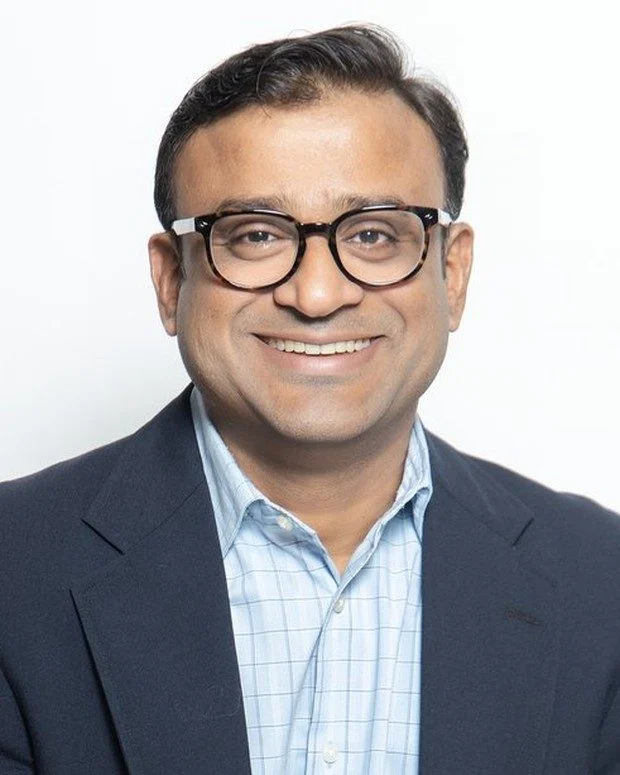
Dr. Adatrow trained at the University of Tennessee and Indiana University hospital in treating gum diseases, performing dental laser therapy and administering sedation. He is the only practising board-certified periodontist and prosthodontist in the southern United States, with more than 30 years of experience.

Dr. Pradeep Adatrow
Dr. Pradeep Adatrow
DDS, MSD · Periodontics & Prosthodontics

A former University of Tennessee professor and program director, and the only board-certified periodontal and implant surgeon who is also a prosthodontist in the southern United States. Degrees from the University of Alabama and the University of Tennessee, with postdoctoral training at Indiana University. That combination is why the conversation about removing a tooth and the conversation about replacing it happen in one room, with one person. Fellow of the International College of Dentists.

Learn more →
Dr. Jay Patel
Dr. Jay Patel
DDS, MPH · Board Certified Periodontist

A board-certified periodontal and dental implant surgeon, with his dental degree from USC's Ostrow School of Dentistry and postgraduate surgical training at the University of Pittsburgh. Known for a gentle chairside manner and for work with complex medical cases, working alongside Dr. Adatrow at the Southaven practice.

Learn more →

Real patients · real Google reviews

What patients say.

Left on Google by patients of this practice. Rated 4.9 across more than 1,900 of them.

“I had my wisdom teeth removed and I was terrified but everything went smooth. The staff took good care of me. Just make sure you follow all the directions and if any questions arise, they are great at answering them. I believe I called a few times and they were patient every time.”
Ashley Martin
“My adult disabled autistic son had two wisdom teeth pulled. The Center was great with him and it was a great experience which we haven’t had with other dentists in the past. It was pain free and he’s agreed to go back there for regular dentistry if needed.”
Tina Sansone
“Danni and Gracie were absolutely AMAZING!! They made me feel completely at ease during my procedure, and I couldn’t be happier with the results. The entire staff is so friendly and professional, they truly go above and beyond to ensure a comfortable experience.”
Darchelle Mitchell
Robyn Blackmon
“The staff and doctors are very friendly and willing to answer any questions that you may have to put your concerns at ease.”
Bridgett
“Great care, very caring and I felt safe with them.”
Kathy Parker
4.9★
Rated across 1,900+ reviews
30+
Years of clinical experience
25k+
Dental implants placed

Laser gum depigmentation & frenectomy

Laser gum lightening and frenectomy.

Laser gum depigmentation (gum bleaching)

Some people have naturally dark or patchy gums and would like a more even, lighter shade. Laser gum depigmentation, often called gum bleaching or gum lightening, gently removes the thin pigmented surface layer of the gum so lighter tissue can heal in its place. It is a cosmetic choice, not a medical need, and patients from Memphis, Southaven, Collierville and the rest of the Mid-South ask about it.

At your consultation we look at your gum health first, explain what result is realistic for you, and talk through healing time and the chance that some pigment returns over the years.

Laser frenectomy

A frenectomy releases a tight band of tissue (a frenum) under the tongue or lip that can pull on the gums or limit movement. Where a laser is suitable, it can often be done with little bleeding and a quick recovery. Whether it is right for you depends on the exam.

Laser gum treatment

Laser periodontal treatment in Memphis and Southaven.

Laser treatment for gum disease

In selected cases, a dental laser can help remove infected gum tissue and bacteria from periodontal pockets as part of gum disease treatment. It is one tool alongside deep cleaning, not a replacement for it, and many patients notice less bleeding and a quicker recovery.

Laser frenectomy for adults and children

A tight frenum under the tongue (tongue-tie) or upper lip (lip-tie) can pull on the gums, contribute to recession or limit movement. A laser frenectomy releases it, usually with little bleeding and no or few stitches. We examine first and confirm a frenectomy will actually help.

Laser gum lightening

For dark or patchy gums, see our dedicated laser gum depigmentation page. For gum reshaping before a crown, see crown lengthening.

Patients come to our Southaven, MS office from Memphis, Collierville, Germantown and across the Mid-South.

Why Southaven patients choose a specialist for laser gum treatment

Not every office in DeSoto County has a dental laser. Our Southaven team uses it for gum depigmentation, frenectomy and gum disease treatment, usually with less bleeding and faster healing than a scalpel. Free consultation, financing and most dental insurance accepted.

Good to know

Questions people ask.

Is laser gum surgery better than traditional gum surgery?

It depends on the problem. A laser can mean less bleeding and faster healing for some procedures, but it is not right for every case. We recommend the approach that fits your diagnosis.

Does a laser frenectomy hurt?

Local anesthesia is used, so the procedure itself should not hurt. Most people have mild soreness for a few days, managed with over-the-counter pain relief.

Can a laser lighten dark gums?

Often, yes. Laser gum depigmentation removes the pigmented surface layer so lighter tissue heals in its place. Results vary, and some pigment can return over time. We check your gum health and explain what to expect before treatment.

Do you do laser frenectomy?

Yes. When a tight lip or tongue tie is pulling on the gums or limiting movement, a laser frenectomy can release it, often with little bleeding. We confirm it is the right choice at your exam.

Are laser dental treatments painless?

Not necessarily. Many patients find selected laser procedures comfortable, and lasers may reduce vibration or bleeding in some situations. Anesthesia may still be appropriate. We plan comfort around the procedure and the patient rather than promising pain-free treatment.

Can I choose laser treatment?

Your preference matters, but the final recommendation depends on the diagnosis and whether a laser is appropriate for the tissue and treatment objective. We explain the reasonable options and why we recommend one over another.

Are dental lasers harmful?

Dental lasers are designed for controlled clinical use. Safety depends on the correct wavelength, settings, training, protective measures, and case selection.

What are the drawbacks?

A laser cannot replace every dental instrument or every surgical technique. Some procedures still require conventional preparation, instrumentation, suturing, or other treatment. Cost and treatment time can also vary.

What does laser treatment cost?

Cost depends on the condition and the procedure being performed, not simply on whether a laser is used. We provide an estimate after diagnosis and treatment planning.

Will insurance cover laser treatment?

Coverage is usually based on the covered procedure and the terms of the plan rather than the device used. Our team helps file claims and provide requested documentation, but the insurance carrier makes the final benefit decision.

Do you see patients from Memphis and across the state line?

Regularly. Patients come to our Southaven office from Memphis, Germantown, Collierville, Bartlett and Cordova in Tennessee; from Olive Branch, Hernando, Horn Lake, Batesville, Senatobia, Holly Springs and Clarksdale in Mississippi; and from West Memphis, Marion, Forrest City and Brinkley in Arkansas.

Book an appointment

Let’s find the right approach.

You do not need to know which procedure you need before you come in. Tell us what is going on, and our team will listen, make a diagnosis, and explain the reasonable options, including whether a laser is likely to help. A real person on our team will call you back.

Call or text · (662) 655-4868

Email · info@adatmj.com

Address · 7135 Getwell Rd, Suite 100, Southaven, MS 38672

Hours · Mon to Wed, 8am to 5pm · Thu and Fri, 7am to 3:30pm

Get directions

7135 Getwell Rd, Suite 100
Southaven, MS 38672

Request a consultation

Please tell us your name.
Please add a number we can reach you on.
That email doesn't look right.

Your details stay with us. Never shared, never sold. Requesting a time commits you to nothing.